
 EN
EN
 FR
FR DE
DE JA
JA KO
KO RU
RU ES
ES AR
AR IT
IT
Wind Sensors, LED Lights, and App Control: Which Awning Features Matter Most?
When buyers compare electric RV awnings, the feature list can become confusing very quickly. One model highlights an awning wind sensor, another promotes an LED integrated awning, and another focuses on app controlled awning convenience. Each feature sounds useful, but not every feature matters equally to every camper.
The best way to choose is not to ask which awning has the longest list of functions. It is to ask which features will matter when you actually use the awning: when the wind picks up, when the sun gets low, when you are cooking outside after dark, or when you need to retract the awning quickly before leaving the campsite.
In practice, awning features fall into three groups: protection, convenience, and comfort. Understanding those groups makes the decision much easier.
Start with Protection: Why Wind Sensors Matter
A wind sensor is one of the most practical features on an electric RV awning because it relates directly to how the awning is used in changing weather. Wind is one of the conditions that can create stress for an extended awning, so being able to retract more quickly is important.
An automatic retract awning feature can help when conditions change suddenly. This is especially useful if the user has stepped away from the vehicle, is busy setting up the campsite, or does not notice the wind building right away.
The important thing is to understand what the feature is for. A wind sensor does not mean the awning should be left open through strong wind. It is better understood as a helpful support system that encourages timely retraction. The safest habit is still to close the awning when wind or heavy rain becomes a concern.
For many users, this makes the wind sensor one of the first features worth considering. It supports the basic protection of the awning rather than simply adding convenience.
Remote Control Comes Next
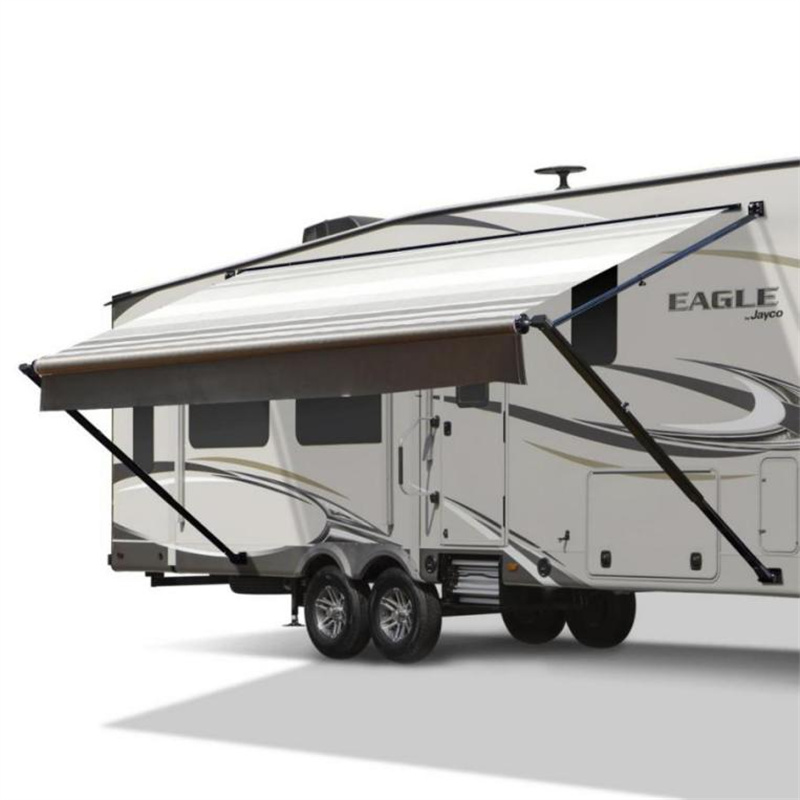
After wind response, remote control is usually the next most practical feature. A large awning can be inconvenient to operate manually, especially on a caravan, travel trailer, or motorhome where the shaded area is wide. Remote operation makes extension and retraction easier, which improves the way the awning is used day to day.
This matters because convenience often shapes behavior. If closing the awning is difficult, users may delay doing it. If it is quick and easy, they are more likely to retract it before leaving the campsite or when weather changes.
A remote control awning is also helpful for older users, solo travelers, rental RV users, and anyone who wants a simpler setup process. It does not make the awning more complicated; it makes ordinary use less physical.
Manual Backup Is Easy to Overlook
When people talk about smart awning features, they often focus on sensors, lights, and app control. But manual backup is one of the most important practical details.
An electric awning should still be manageable if the power system is not working normally. If the battery voltage is low or the motor does not respond, the user still needs a way to bring the awning in. A manual override or emergency crank provides that reassurance.
This is not a feature that creates excitement at first glance, but it matters in the moments when something goes wrong. For buyers comparing electric awnings, manual backup should be part of the decision, especially if the awning will be used frequently or in changing weather.
LED Lighting Is About Campsite Comfort
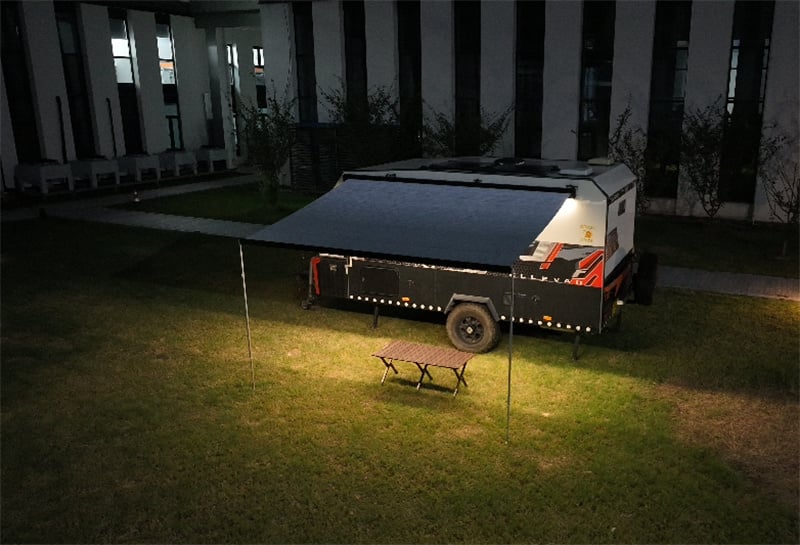
An LED integrated awning changes the way the outdoor area feels in the evening. After sunset, the shaded space beside the RV can remain useful for cooking, relaxing, organizing gear, or spending time with family.
Lighting is not as essential as wind response or retraction control, but it can be very valuable for users who spend long evenings outside. It reduces the need for extra portable lights and helps make the campsite feel more organized.
This is where comfort features start to matter. They may not be the first priority for safety or operation, but they can make the RV lifestyle more enjoyable. For users who treat the awning area as an outdoor living room, lighting is often more useful than it first appears.
App or Bluetooth Control Is a Lifestyle Choice
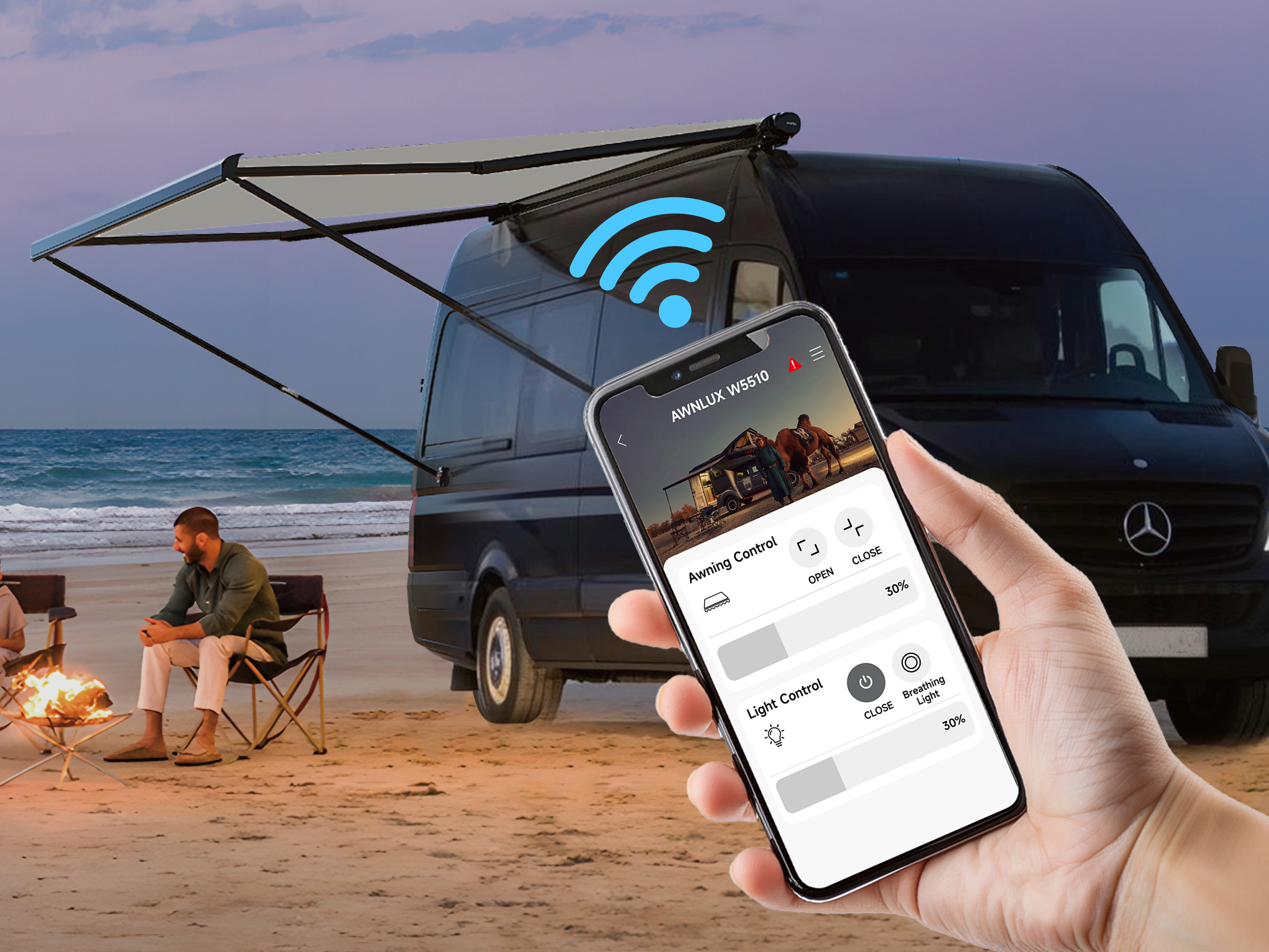
An app controlled awning or Bluetooth-enabled function can be convenient for users who like managing equipment from a phone. It gives the awning a more modern feel and may fit well with a vehicle setup that already includes app-based controls.
However, app control should not be treated as a requirement for every buyer. Some users prefer a physical remote because it is simple, direct, and easy for anyone in the vehicle to use. Others appreciate the phone-based experience because it keeps controls centralized.
The right choice depends on user preference. If the goal is straightforward operation, a remote may be enough. If the user values a more connected campsite experience, Bluetooth or app-style control can be a worthwhile upgrade.
Which Features Should You Prioritize?
A useful way to think about awning features is to rank them by the type of problem they solve.
Protection features should come first. Wind sensor support, automatic retraction, and manual backup help users manage the awning when conditions change or when something unexpected happens.
Convenience features come next. Remote control and electric operation make daily use easier, especially for larger awnings and frequent campers.
Comfort features come after that. LED lighting and app control improve the experience, but they are usually more personal. Some users will value them highly, while others may prefer to keep the awning setup simple.
This order does not mean comfort features are unimportant. It simply helps buyers avoid choosing based on the most attractive feature name instead of the most useful one.
How Different Campers May Choose
A weekend camper who uses a small awning occasionally may not need every advanced function. A simple electric setup or even a manual awning may be enough.
A caravan owner using a larger roll-out awning may value remote control and wind sensor support much more. The bigger the awning, the more important easy retraction becomes.
A motorhome user who spends evenings outside may prioritize lighting after choosing the right structure and control features. A tech-focused user may appreciate Bluetooth control, while another user may prefer a basic remote.
The point is that awning features should follow camping style. The best feature set is the one that makes the awning easier to use in the situations the owner actually faces.
Final Advice
If you are comparing wind sensors, LED lights, and app control, start with the features that protect the awning and help you retract it quickly. An awning wind sensor, automatic retract function, and manual backup provide practical value when conditions change.
After that, consider convenience and comfort. Remote control makes everyday operation smoother. LED lighting improves evening use. App or Bluetooth control can be useful if you prefer a more connected setup.
The right awning is not necessarily the one with the most smart features. It is the one with the features that matter most at your campsite.