
 EN
EN
 FR
FR DE
DE JA
JA KO
KO RU
RU ES
ES AR
AR IT
IT
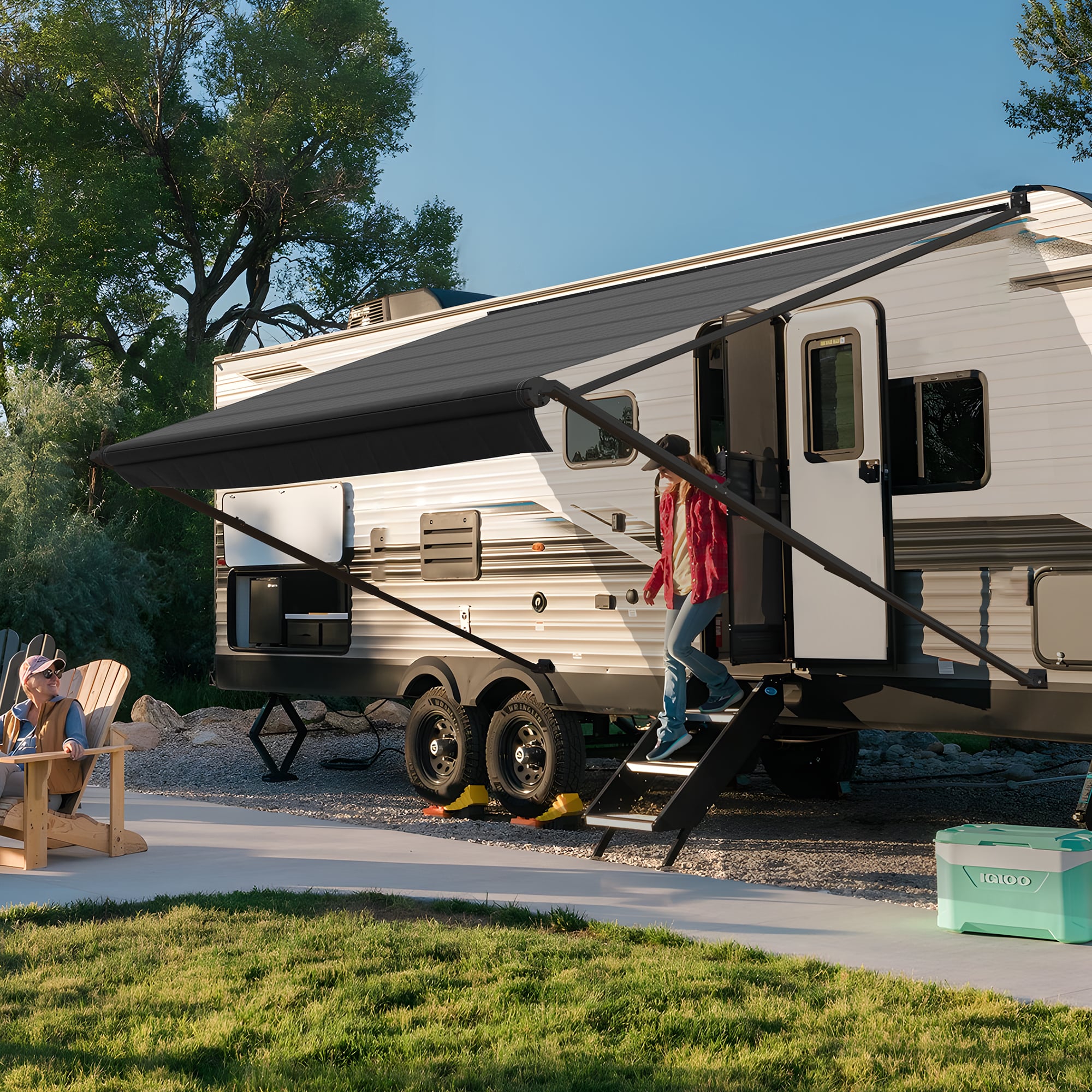
6 Smart Features That Make Motorized RV Awnings More Convenient
A good motorized awning should make campsite life feel easier, not more complicated. When RV owners look at motorized awning features, it is easy to get distracted by every available option. Remote control, wind sensors, LED lights, Bluetooth control, manual backup, and rain adjustment all sound useful. But the real value depends on whether those features solve everyday problems at the campsite.
Picture arriving at a campsite in the late afternoon. The sun is still strong, the outdoor chairs need to be set up, and the family wants shade quickly. Later that evening, the awning light helps keep the outdoor space usable after dark. During the night, wind begins to build, and the ability to retract the awning easily becomes more important than any decorative feature.
This is the right way to think about a motorized RV awning. Smart features should support real camping moments.
1. Remote Control for Easier Campsite Setup
A remote control awning is one of the most immediately useful upgrades. It allows the user to extend or retract the awning without standing directly at the mechanism or manually managing the fabric. This is especially helpful with larger roll-out awnings, where the size of the fabric can make manual operation more tiring.
For RV owners who move frequently, remote control also makes setup faster. You arrive, level the vehicle, open the awning, and begin arranging the campsite without turning the process into a chore. For caravan users, this convenience becomes even more noticeable because the awning often covers a larger outdoor living area.
Remote control is not about luxury alone. It encourages better use. When it is easy to retract the awning, users are more likely to close it before leaving the campsite or when the weather changes.
2. Wind Sensor Support for Changing Weather
Wind can change quickly, especially in open campgrounds, coastal areas, or mountain valleys. A wind sensor can add practical reassurance by helping the awning respond when conditions become unsuitable.
This feature is most useful when paired with responsible use. It should not be seen as permission to leave the awning open in strong wind. Instead, it is a support feature that helps reduce risk when the user is distracted or away from the awning for a short time.
For electric roll-out awnings such as W5700 or solar roll-out options such as SA5700, wind-sensor-related convenience fits naturally into the way larger awnings are used. It gives the user more confidence without changing the basic rule: when the weather becomes rough, retract the awning.
3. Manual Override for Backup Confidence
One of the most practical features in a motorized awning is not the most exciting one. It is manual override.
An electric awning depends on the vehicle’s power system and motor operation. If the battery is low, wiring needs attention, or the motor does not respond, the awning still needs to close. A manual crank or emergency hand operation gives the user a backup option.
This matters most in real weather. If wind or rain is coming, the user cannot simply wait for an electrical issue to be solved. A backup method makes the awning more dependable because it keeps the user in control even when the motorized function is unavailable.
For many buyers, this is the kind of feature that should be valued more than it is. It may not look impressive in a product photo, but it can make a real difference when something unexpected happens.
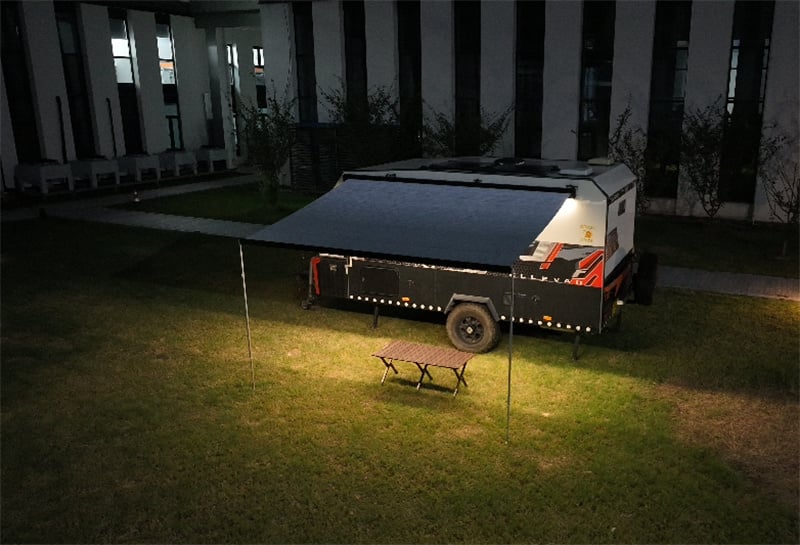
4. LED or COB Lighting for Evening Use
An LED awning light turns the shaded area into a more usable outdoor space after sunset. It can help with cooking, packing gear, reading, or simply relaxing outside the RV in the evening.
Lighting is not essential for every user, but for people who spend long evenings outdoors, it adds comfort in a very practical way. Instead of carrying extra portable lights or setting up temporary lamps around the campsite, integrated or optional lighting keeps the space cleaner and easier to use.
Some Awnlux awning directions, such as European-style models with COB lighting, fit this kind of comfort-focused use. The point is not to make the awning feel overly technical. It is to make the campsite feel more complete once daylight fades.
5. Bluetooth Control for a More Modern Experience
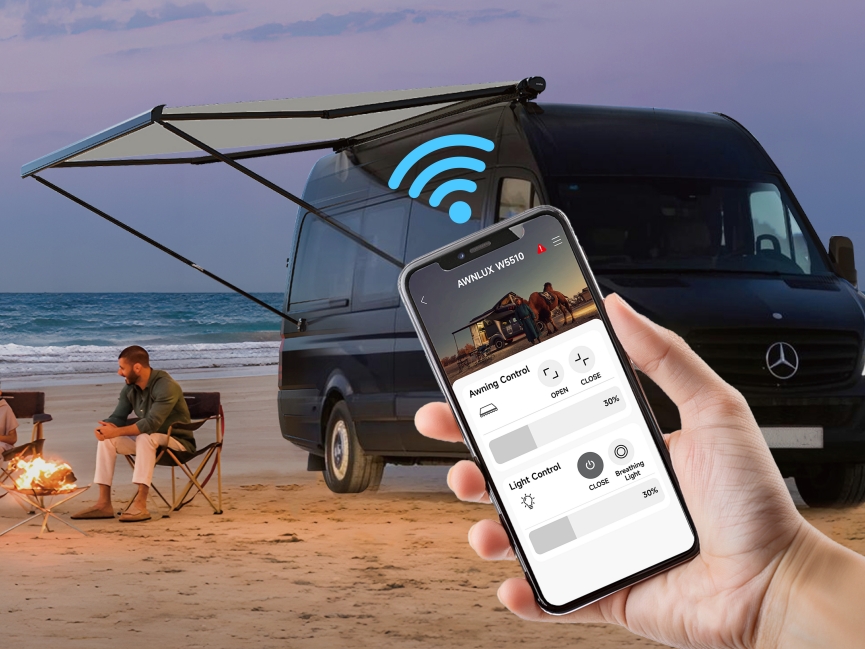
Bluetooth awning control is useful for users who prefer managing RV equipment from a phone. It can make the awning feel more integrated into a modern camping setup, especially for people who already use mobile controls for other vehicle or campsite functions.
This feature should be treated as a convenience upgrade rather than a must-have for everyone. Some users will appreciate the ability to control selected awning functions through an app-style experience. Others may be perfectly satisfied with a physical remote.
The best way to approach Bluetooth control is to ask how the user actually camps. If a simple remote already solves the problem, Bluetooth may be optional. If the user values a cleaner, more connected setup, it can be a welcome addition.
6. Pitch Adjustment for Better Rain Management
Rain does not always mean the awning needs to be unusable, but it does require care. A pitch or arm-angle adjustment can help water drain instead of collecting on the fabric. This is especially relevant for roll-out awnings, where the fabric creates a broad surface above the outdoor living area.
This feature is not a substitute for retracting the awning during heavy rain or wind. Its value is in everyday campsite use, when light rain or damp weather needs to be managed more comfortably.
For users who camp through changing conditions, this small adjustment can improve the experience. It helps the awning feel less like a fixed cover and more like a flexible part of the campsite.
Which Features Matter Most?
Not every feature has the same importance. For most users, the first priority should be features that help protect the awning and make it easier to retract. Wind sensor support, remote operation, and manual override usually matter more than purely comfort-based upgrades.
After that, features such as lighting and Bluetooth control become a question of camping style. If the user spends evenings outside, lighting is valuable. If they enjoy phone-based control, Bluetooth may be worth considering. If they mainly need simple shade, these features may be less important.
This is how buyers should think about motorized awning features: start with control and protection, then consider comfort.
Final Advice
The most useful smart features are the ones you notice during real campsite moments. Remote control helps when setting up. Wind sensor support helps when weather changes. Manual override helps when power is not available. LED lighting makes evenings outside more comfortable. Bluetooth control adds convenience for users who prefer a connected setup. Pitch adjustment helps with practical rain management.
A motorized RV awning does not need every possible feature to be worth owning. It needs the right features for the way you camp.
Get in touch
Table of Contents
- 1. Remote Control for Easier Campsite Setup
- 2. Wind Sensor Support for Changing Weather
- 3. Manual Override for Backup Confidence
- 4. LED or COB Lighting for Evening Use
- 5. Bluetooth Control for a More Modern Experience
- 6. Pitch Adjustment for Better Rain Management
- Which Features Matter Most?
- Final Advice