
 EN
EN
 FR
FR DE
DE JA
JA KO
KO RU
RU ES
ES AR
AR IT
IT
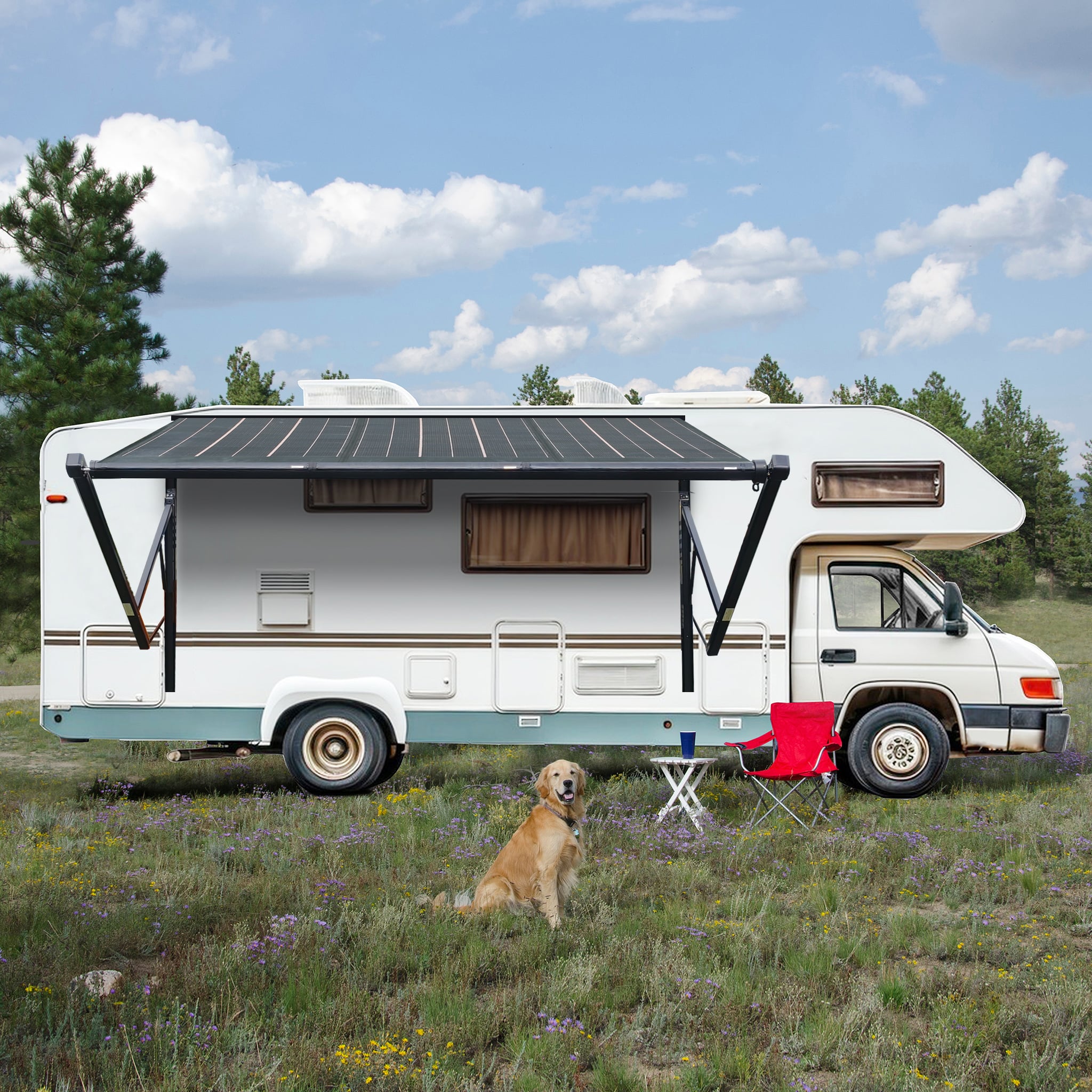
Every RV build involves trade-offs. Add more comfort, and you may add weight. Add more power equipment, and you may need more space. Add a larger awning, and you need to think about installation, vehicle balance, and how the structure will be used on the road.
That is why solar awning weight matters. A solar awning does more than create shade. It also adds a power-generating surface to the side of the vehicle. For RV owners, van builders, and caravan users, the question becomes whether the added function is worth the added weight and complexity.
A CIGS solar awning with a fabric weight of 1.3 kg/m² is designed to help with that balance. It gives users a way to think about shade and off-grid RV power together, without treating the awning only as a campsite accessory.
Why Weight Matters in an RV Awning
RV owners are used to thinking about weight. Water tanks, batteries, appliances, roof accessories, storage, and outdoor equipment all add up. Even when one item does not feel heavy on its own, the total build matters.
With a solar awning, weight matters in two ways. First, the awning must be suitable for the vehicle structure and installation position. Second, the added weight should make sense compared with the benefit it provides.
A standard awning offers shade. A solar awning offers shade and power generation. That extra function can justify the additional consideration, especially for users who spend time away from powered campsites.
This is why a RV weight analysis should not only ask, “How heavy is it?” It should also ask, “What does this weight help the vehicle do?”
CIGS Solar Awnings and Mobile Use
A CIGS solar awning is different from thinking about traditional rigid solar panels. RVs and caravans move, vibrate, park at different angles, and travel through changing weather. The awning itself is opened and closed as part of the camping routine.
A flexible solar surface is naturally suited to this kind of mobile use. It allows the awning to remain part of the outdoor living setup while also contributing to the power system. This makes it relevant for users who want to make better use of the vehicle exterior without relying only on roof space.
The 1.3 kg/m² figure is meaningful because it helps buyers understand the balance between function and added weight. It does not remove the need to check vehicle fit, installation conditions, or electrical compatibility, but it makes solar awnings more approachable for RV applications.
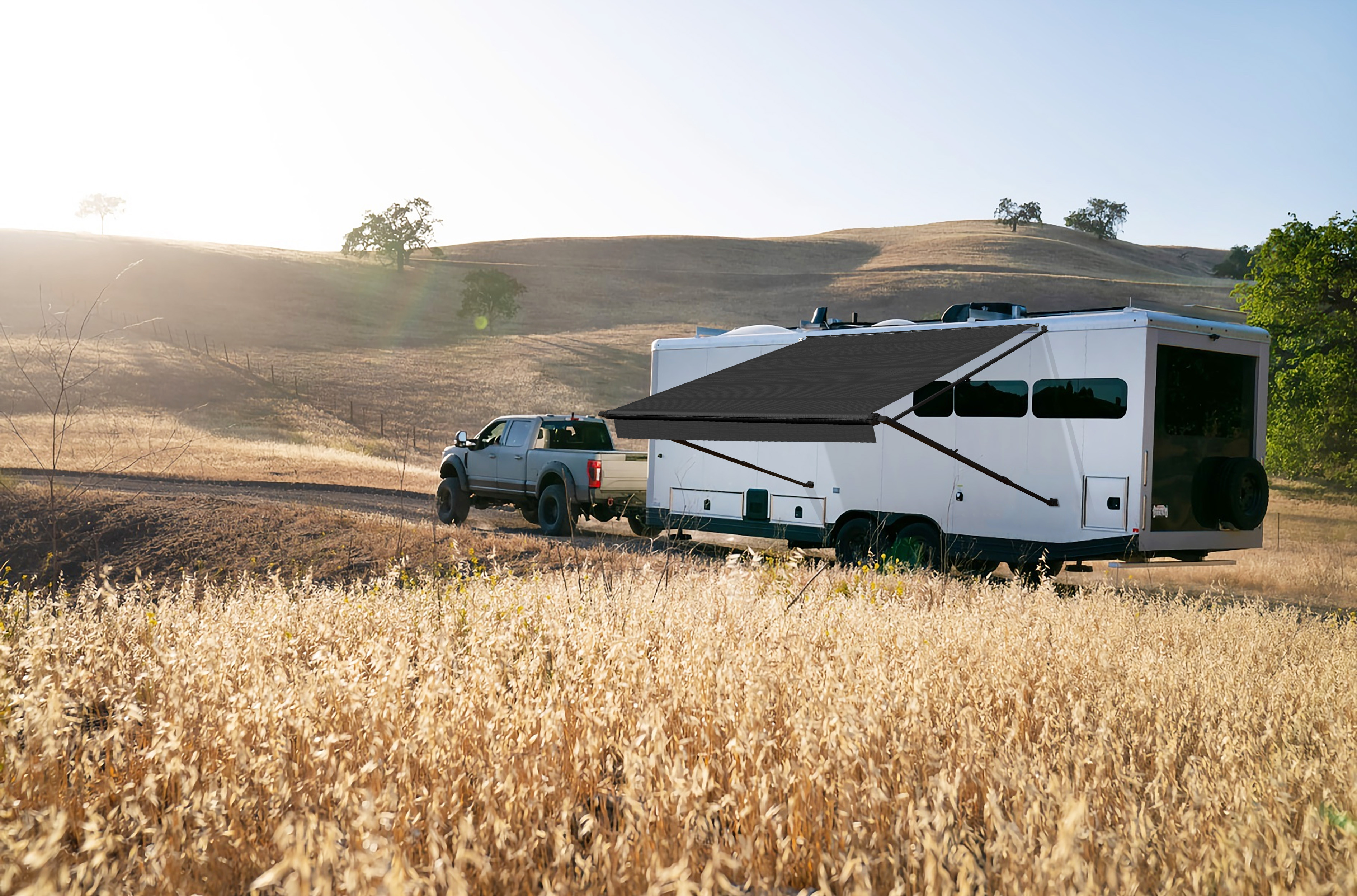
Motorhomes: A Natural Fit for Full Cassette Solar Awnings
Motorhome users often look for a clean, integrated exterior. They may also travel long distances, park in different environments, and spend time away from shore power. For this kind of use, a full cassette solar awning can be a practical direction.
A model such as SA5900 fits naturally into this conversation because it combines full cassette storage with solar functionality. The full cassette structure helps protect the awning when closed, while the solar surface adds power-generation potential when deployed.
For motorhome owners, this can be attractive because it keeps the awning from feeling like a separate add-on. It becomes part of the vehicle’s shade and power strategy at the same time.
The key consideration is still fit. The vehicle size, mounting position, and electrical setup should all be checked before choosing the final configuration.
Caravans: Larger Shade and Solar Surface
Caravan users often want a larger shaded area because outdoor living is a major part of the camping experience. A roll-out solar awning can make sense here because it provides both coverage and solar generation across a wider surface.
Awnlux solar roll-out directions such as SA5600 and SA5700 are relevant for this kind of use. A manual solar roll-out direction may appeal to users who prefer a simpler setup, while an electric direction may suit those who want easier operation for a larger awning.
For caravans, the awning is often used during longer stays. That means the solar surface may have more opportunity to contribute to the power system while the shaded area improves campsite comfort.
This is where RV type comparison becomes important. A caravan and a motorhome may both benefit from solar awnings, but they may benefit from different structures.
Vans and Compact RVs: Check Space Carefully
Van users may also be interested in solar awnings, especially if they travel off-grid or have limited roof space. However, compact vehicles require more careful planning.
A van may have less side-wall length, different mounting constraints, or roof equipment that affects installation choices. In some cases, a full cassette direction may be more suitable because it stores cleanly and protects the fabric during travel. In other cases, the available space may limit the size of the awning that can be used.
For van owners, the question is not only whether a solar awning is useful. It is whether the vehicle has the right structure, installation position, and power system to make good use of it.
This is why professional confirmation is especially important for compact builds.
Balancing Weight with Power Expectations
A solar awning can support off-grid camping, but users should keep expectations realistic. The power output depends on sunlight, panel size, controller compatibility, battery capacity, and how the awning is used.
A larger awning surface can support more solar generation potential, but it may also require more space and stronger installation planning. A smaller setup may be easier to fit but may contribute less power.
The best balance is not always the largest awning. It is the awning that fits the vehicle and supports the user’s actual power needs. For someone who only needs occasional charging support, a smaller setup may be enough. For someone who camps off-grid more often, a larger solar awning direction may be more meaningful.
Installation and Electrical Planning
A solar awning should be treated as both an exterior accessory and an electrical component. Physical installation needs to suit the vehicle body, while the electrical connection needs to match the power system.
Users should think about the battery setup, controller requirements, wiring route, and how the awning will be used in normal camping conditions. Because electrical connection is involved, professional installation or technical guidance is often the more responsible path.
This is not meant to make solar awnings sound complicated. It simply reflects the fact that they do more than provide shade.
Final Advice
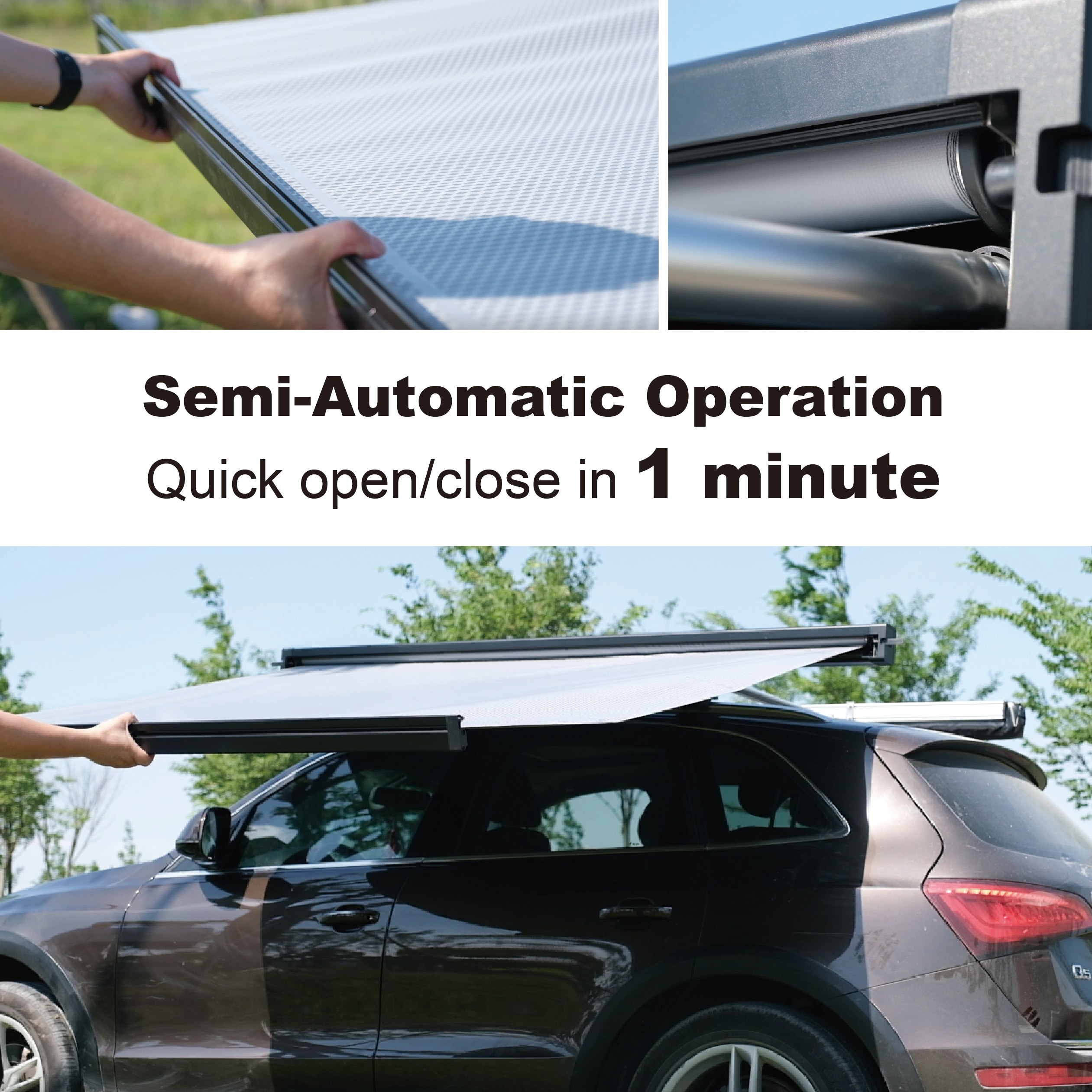
A 1.3 kg/m² CIGS solar awning is best suited for RV users who want to balance shade, weight, and off-grid power potential. Motorhome owners may lean toward a full cassette solar awning for cleaner storage and integrated use. Caravan users may prefer roll-out solar awnings for larger shade coverage. Van users should pay close attention to available space and mounting conditions.
The right choice depends on vehicle type, installation position, travel style, and energy needs. A solar awning is most valuable when it fits naturally into the way the RV is built and used.
The goal is not to add solar for its own sake. The goal is to make the awning work harder without asking too much from the vehicle.
Get in touch
Table of Contents
- Why Weight Matters in an RV Awning
- CIGS Solar Awnings and Mobile Use
- Motorhomes: A Natural Fit for Full Cassette Solar Awnings
- Caravans: Larger Shade and Solar Surface
- Vans and Compact RVs: Check Space Carefully
- Balancing Weight with Power Expectations
- Installation and Electrical Planning
- Final Advice