
 EN
EN
 FR
FR DE
DE JA
JA KO
KO RU
RU ES
ES AR
AR IT
IT
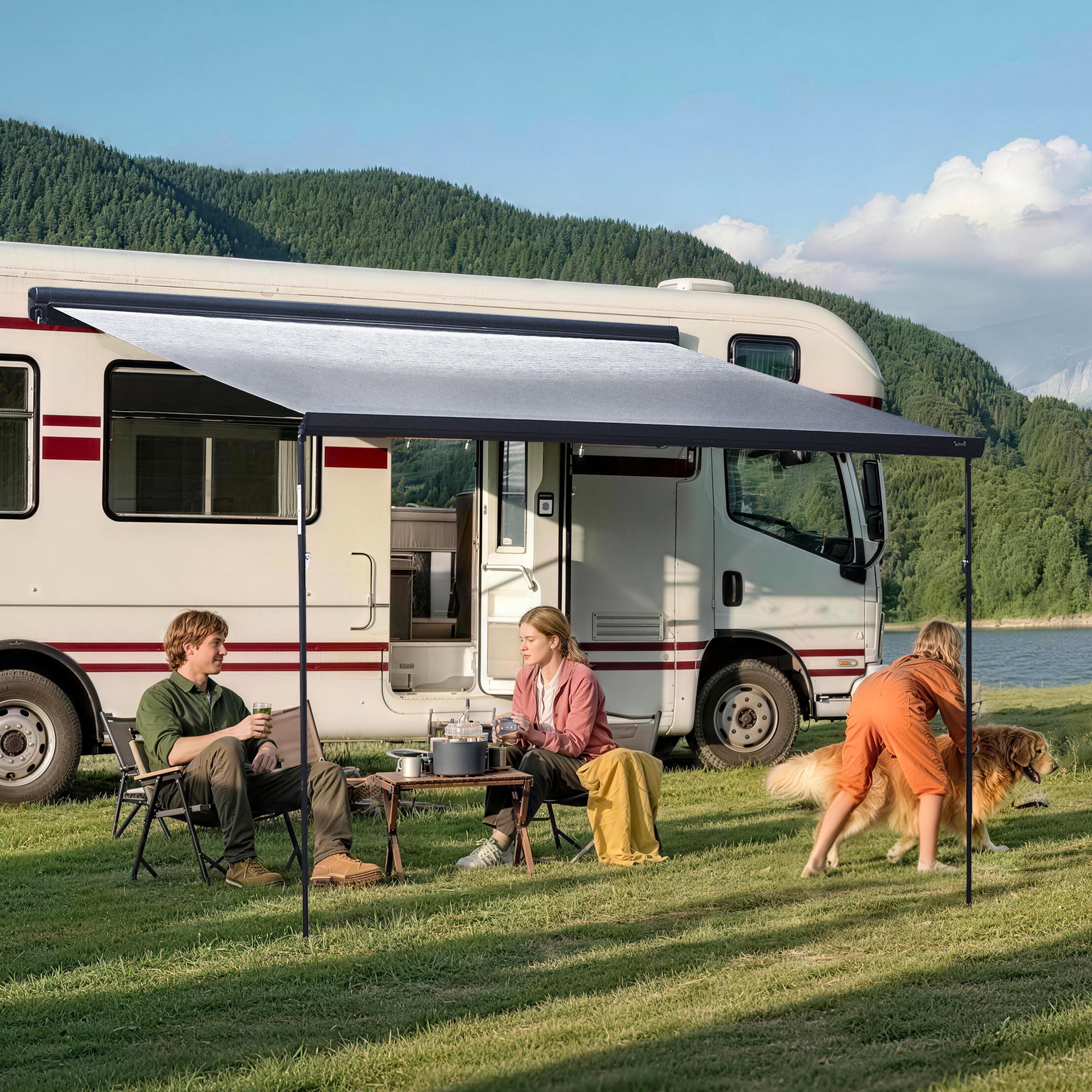
Entry-Level vs Premium RV Solar Awnings: Which One Fits Your Budget?
For many RV owners, the idea of a solar awning is immediately appealing. If an awning can create shade and also help generate power, why not upgrade? But the decision is not always that simple. An entry level awning and a premium solar awning serve different kinds of users, and the best choice depends on how the RV is used.
A buyer who camps occasionally at powered sites may not need the same solution as someone who spends long stretches off-grid. A caravan owner who wants a wide shaded living area may think differently from a motorhome user who wants a cleaner full cassette structure. This is why a good value for money awning is not always the cheapest one or the most advanced one. It is the one that fits the user’s real camping habits.
Start with the Real Need: Shade or Shade Plus Power?
The first question is simple: do you only need shade, or do you also need solar support?
If the main goal is to make the campsite more comfortable, a standard awning may already solve the problem. It creates a shaded area beside the RV, protects the entrance from direct sun, and makes outdoor living more pleasant. For many users, especially those who stay at powered campsites, this may be enough.
A solar awning changes the role of the product. It still provides shade, but it also becomes part of the RV’s power system. That means the buyer needs to think about more than fabric and frame. Battery capacity, controller compatibility, sunlight conditions, and daily power use all become part of the decision.
This is where the budget question becomes more meaningful. You are not just paying for a different awning. You are deciding whether the awning should contribute to off-grid living.
When an Entry-Level Direction Makes Sense
An entry-level direction is suitable for users who want reliable shade without adding unnecessary complexity. If you use your RV mostly for short trips, powered campsites, or occasional holidays, a simple awning setup may be the most reasonable choice.
A manual roll-out awning can be practical for caravan users who want a shaded outdoor area and are comfortable operating the awning by hand. A standard full cassette awning can make sense for van or motorhome users who want cleaner storage and fabric protection without solar functionality.
This kind of choice is not a compromise if it matches the lifestyle. A user who does not need off-grid power support may get better value from a well-matched standard awning than from a solar model that is rarely used for charging.
The key is to avoid upgrading only because the feature sounds attractive. Solar is valuable when the user has a real use for it.
When a Premium Solar Awning Becomes Worthwhile
A premium solar awning is more relevant for users who spend meaningful time away from shore power or who want their outdoor shade system to support the vehicle’s energy setup.
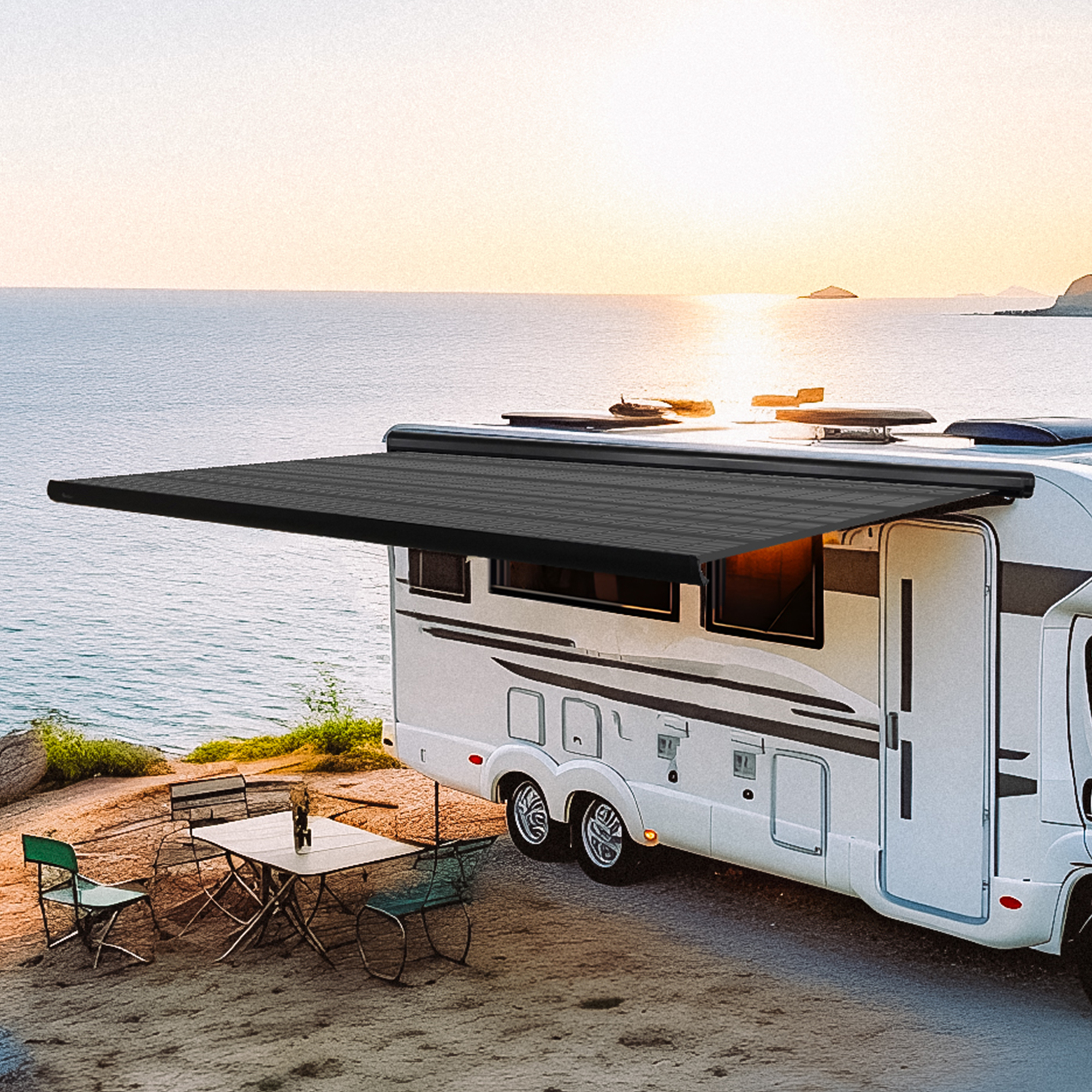
For motorhome users, a full cassette solar direction such as SA5900 can be considered when the buyer wants a cleaner enclosed structure along with solar generation. For caravan users, roll-out solar directions such as SA5600 or SA5700 may be more practical because they provide a larger shaded surface and fit a camping style where the vehicle may stay parked for longer periods.
A premium solar awning can also appeal to users who want to make better use of the awning surface. Instead of relying only on roof-mounted solar or portable panels, the awning becomes another part of the energy system. This can be especially useful when outdoor living and off-grid camping are part of the same routine.
The value is not only in the solar technology itself. It is in the way the awning supports a different kind of travel.
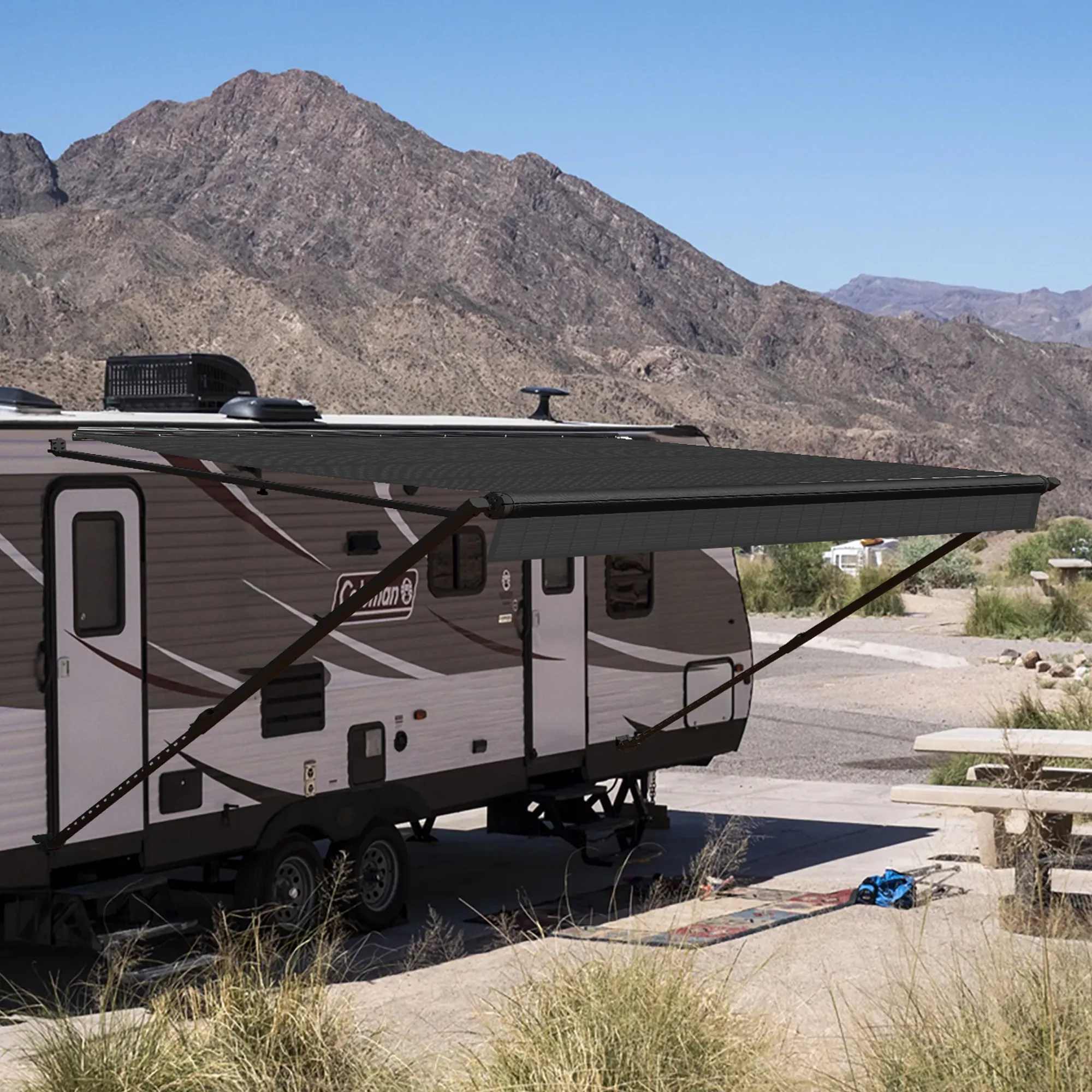
CIGS Solar Awnings and Mobile RV Use
Awnlux solar awnings use CIGS flexible solar technology. For RV applications, flexibility matters because vehicles move, vibrate, and park in different environments. A solar surface on an awning needs to work as part of a mobile lifestyle, not a fixed building installation.
This is one reason buyers considering a premium solar awning should think beyond simple wattage. The awning will be opened, retracted, exposed to sunlight, and used in real campsite conditions. Its value depends on how well it fits the movement and rhythm of RV life.
For users who mainly need shade, this may be more than necessary. For users who regularly camp off-grid, the added solar function can become part of their daily power strategy.
Budget Should Include the Whole System
When comparing entry-level and premium solar awnings, it is easy to focus only on the awning itself. But a solar awning belongs to a larger system.
The user needs to consider how the awning connects to the battery setup, whether the controller is suitable, and how much energy is realistically needed. A solar awning may help recharge batteries, support daily use, or supplement other charging methods, but it should not be evaluated in isolation.
This is especially important for buyers using portable power stations or custom RV battery systems. The awning may be capable of generating power, but the charging result depends on the receiving system and actual sunlight.
A premium solar awning offers better value when the user has the right power setup to benefit from it.
How to Choose the Better Value
The better value choice depends on use frequency, power needs, and vehicle type.
If you camp occasionally, mainly use powered sites, and only need shade, an entry-level awning direction is likely more sensible. It keeps the setup simple and avoids paying for solar functionality that may not be used often.
If you camp off-grid, use a motorhome or caravan for longer stays, and want shade plus power support, a premium solar awning may be easier to justify. In that case, the awning is not just a comfort accessory. It becomes part of how the RV supports daily living.
For many users, the decision becomes clear when they describe a normal trip. If power management is a recurring concern, solar deserves attention. If it rarely comes up, a standard awning may be the smarter choice.
Final Advice
An entry-level awning and a premium solar awning are not competing for the same user in every case. One focuses on practical shade and simpler ownership. The other adds power-generation potential and fits a more energy-aware camping style.
The best value for money awning is the one that matches your real use. If you mostly need shade, choose a simple and reliable structure. If you want shade that also supports off-grid RV power, a solar awning is worth considering.
Budget should follow the way you travel, not the other way around.