
 EN
EN
 FR
FR DE
DE JA
JA KO
KO RU
RU ES
ES AR
AR IT
IT
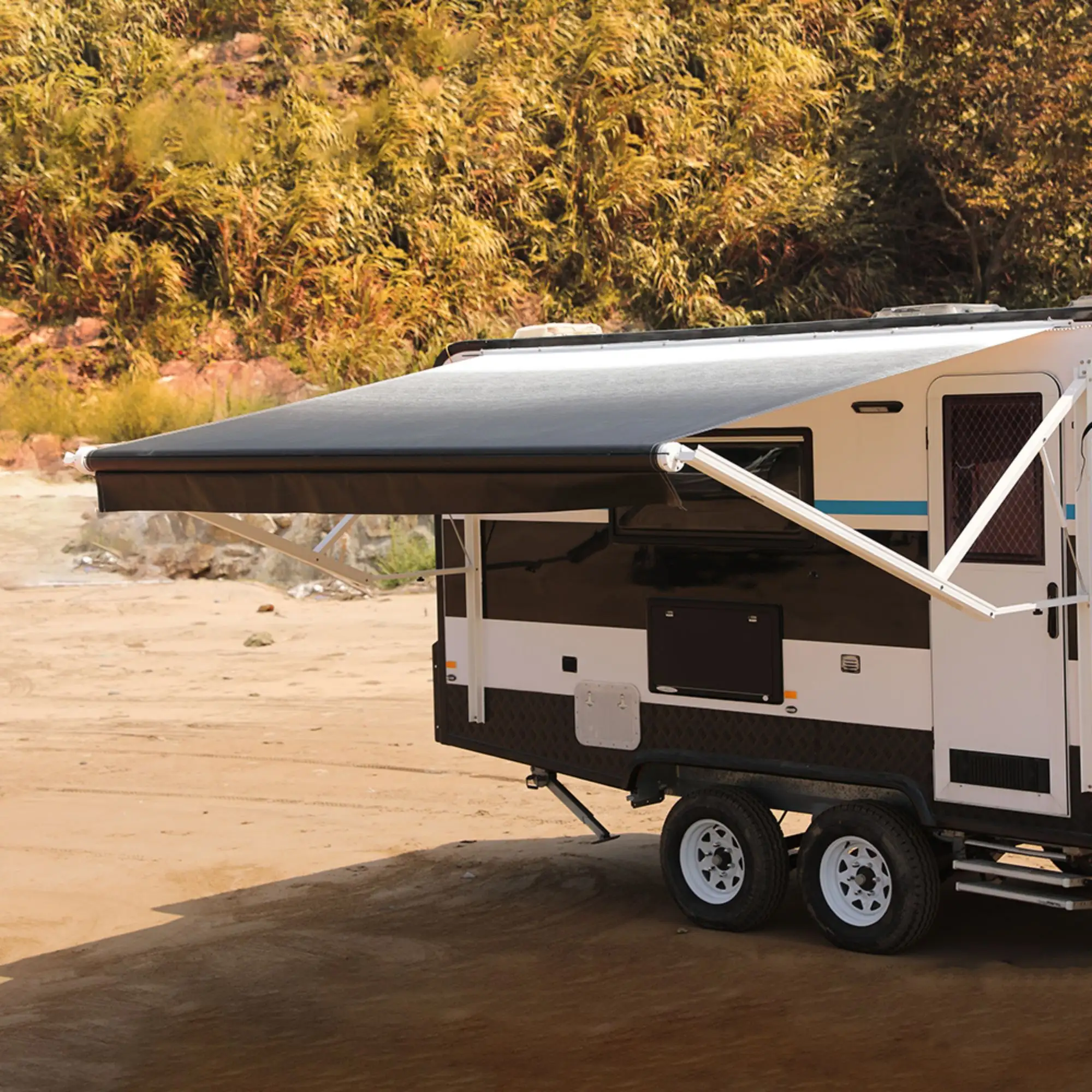
What Level of RV Awning Can You Expect at Different Price Points?
When buyers start researching RV awning pricing, they often expect a simple answer. A basic awning costs one amount, a better awning costs more, and a premium awning costs the most. In real RV use, the difference is not that simple.
Two awnings can look similar from a distance but feel very different once they are installed and used. One may be manual, another electric. One may be a roll-out structure for larger shade, another a full cassette design that protects the fabric when closed. One may only provide shade, while another may include solar generation. These differences all affect how buyers understand awning quality by price.
Instead of asking only how much an awning costs, it is more helpful to ask what level of use the awning is built for.
Why RV Awning Prices Vary
An RV awning is not just a piece of fabric attached to the side of a vehicle. Its value comes from structure, operation, size, material, installation style, and serviceability.
A smaller manual awning used for occasional trips has a different purpose from a large electric roll-out awning used every week. A full cassette awning that stores the fabric inside a protective housing serves a different need from a simple shade structure. A solar awning adds another layer because it becomes part of the RV’s energy setup, not just the campsite layout.
This is why comparing awnings only by price can be misleading. A buyer may pay more because the awning offers stronger storage protection, easier operation, broader coverage, solar functionality, or better long-term support. The key is to understand which of those things actually matter for the way the RV will be used.
Entry-Level Awnings: Practical Shade for Simple Use
An entry level awning is often the right choice for users who mainly need reliable shade without advanced functions. These buyers may camp occasionally, use a smaller vehicle, or prefer a straightforward manual setup.
A manual roll-out awning can make sense here. It gives users a shaded outdoor area without adding unnecessary complexity. For many caravan or RV owners, this is enough. They open the awning when the weather is suitable, close it when they leave, and keep the setup simple.
An entry-level direction can also work for buyers who are more price-conscious or who are equipping vehicles where advanced features are not required. The goal is not to buy the most basic option possible. The goal is to avoid paying for features that will rarely be used.
Mid-Level Awnings: Convenience Starts to Matter
As the awning becomes larger or is used more often, convenience becomes more valuable. This is where electric operation, remote control, and easier retraction begin to justify a higher level of investment.
A motorized roll-out awning is a good example. For a large caravan or RV, opening and closing the awning manually can become inconvenient over time. Electric control makes the process smoother, especially when the campsite is being set up frequently or when the weather changes quickly.
Wind-sensor-related functionality can also fit into this mid-level value range. It is not about making the awning suitable for all weather. It is about helping users retract it more easily when wind becomes a concern.
For many regular campers, this is the point where the upgrade begins to feel worthwhile. The awning is still mainly about shade, but the way it is used becomes more comfortable.
Premium Awnings: Protection, Structure, and Specialized Use
A premium awning is usually chosen because the buyer expects more than basic shade. They may need better stored protection, stronger structural direction, more refined operation, or a product that suits more demanding travel conditions.
Full cassette awnings often fall into this type of consideration. When the fabric is enclosed inside the housing, the awning feels more integrated with the vehicle and better protected when closed. This can be important for van owners, motorhome users, or anyone who frequently drives through changing conditions.
Premium directions may also include heavier-duty structures, roof-mounted options, or designs suited for more frequent use. Awnlux models such as W5900 or W5800 can be considered in this context, depending on the vehicle and installation needs. The point is not to choose a premium awning because it sounds more impressive. The point is to choose it when the travel environment and usage frequency justify the added structure or convenience.
Solar Awnings: When Price Includes Power Potential
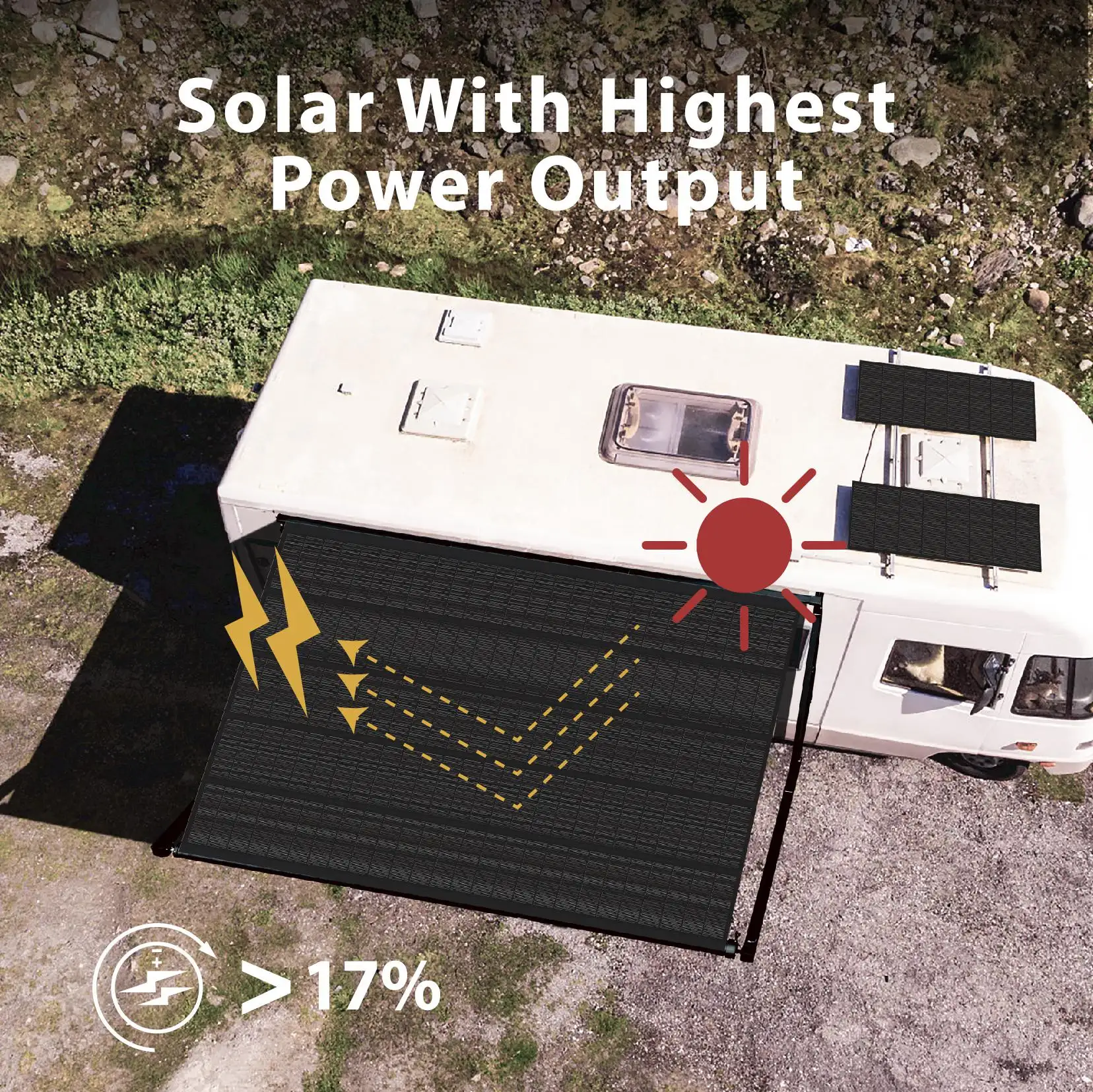
Solar awnings sit in a different category because they do more than provide shade. A solar awning can contribute to off-grid power, which changes how buyers should evaluate value.
A user comparing a standard awning with a solar awning is not comparing two identical products. A solar awning adds CIGS flexible solar technology and needs to be considered as part of the RV’s power system. That means the buyer should think about battery capacity, controller compatibility, sunlight conditions, and real energy needs.
For users who camp mostly at powered sites, the added value of solar may be limited. For users who spend more time off-grid, a solar awning can be much more meaningful. In this case, the higher investment is connected to how the awning supports the broader camping lifestyle.
How to Decide Which Level You Need
The most useful way to think about price level is to match it to use level. Occasional campers may only need a simple manual awning. Regular caravan users may benefit from electric operation. Van and motorhome travelers who move often may value full cassette protection. Off-grid campers may consider solar functionality.
Buyers should also consider long-term support. Replacement parts, service access, and the ability to maintain the awning over time can affect real value. A lower upfront price may feel attractive, but if the awning is difficult to support later, the long-term ownership experience may suffer.
This is especially important for dealers and B2B buyers. The right awning level should match both the end user’s expectations and the service model behind the sale.
Final Advice
Different price points in RV awnings usually reflect different levels of structure, convenience, coverage, and functionality. An entry level awning may be perfect for simple shade. A motorized awning may be worth it for regular use. A premium awning may make sense for frequent travel, better storage protection, or more demanding vehicle setups. A solar awning becomes valuable when power generation is part of the camping plan.
The best way to approach RV awning pricing is not to ask, “What is the cheapest option?” or “What is the most premium option?” The better question is: “Which level of awning matches how this RV will actually be used?”
That is where real value begins.