
 EN
EN
 FR
FR DE
DE JA
JA KO
KO RU
RU ES
ES AR
AR IT
IT
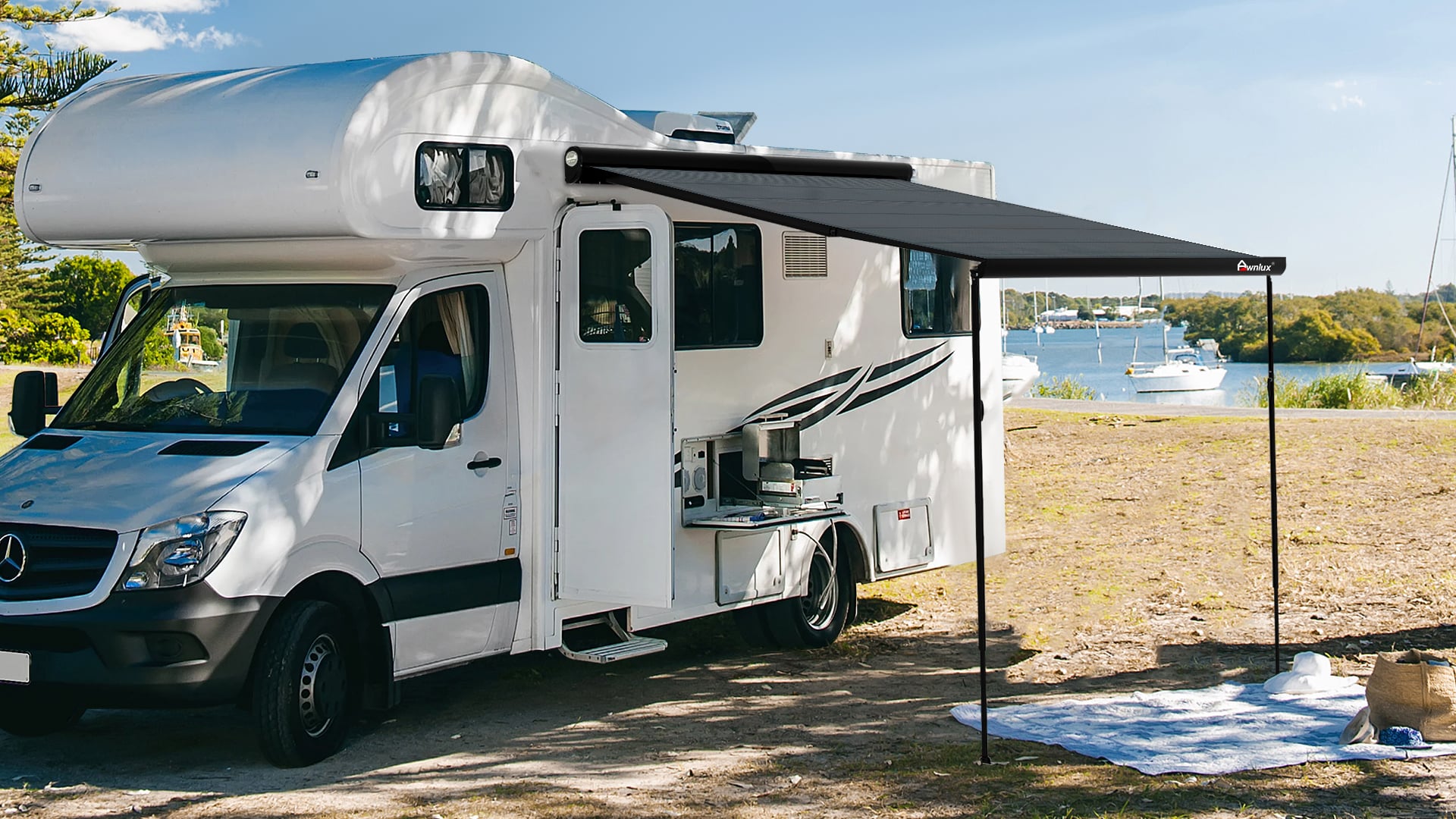
One of the first questions people ask about an RV solar awning is simple: how long will it take to charge my battery? The answer depends on more than the awning itself. A 100Ah battery, a 200Ah battery, and a portable power station such as a Jackery or EcoFlow can all behave very differently, even when connected to the same solar source.
This is why a useful battery size comparison should not start with a fixed promise. It should help users understand the relationship between solar input, battery capacity, sunlight, controller efficiency, and the input limits of the device being charged.
A solar awning can be a valuable part of an RV power setup, but charging time is always a system question.
Why Charging Time Is Not One Simple Number
It is tempting to look at the solar awning’s rated power and divide the battery capacity by that number. In real camping conditions, the result is never that exact.
Sunlight changes throughout the day. The awning may not always face the sun at the ideal angle. Clouds, shade, temperature, and the battery’s current state of charge can all affect charging. The MPPT controller and wiring setup also influence how much usable power reaches the battery.
Portable power stations add another layer because they often have a maximum solar input limit. Even if the solar awning can produce more, the power station may only accept a certain amount.
This does not make solar awnings difficult to use. It simply means the buyer should understand the whole charging path before expecting a precise charging time.
Understanding 100Ah Batteries
A 12V 100Ah battery is a common size in smaller RV, campervan, and auxiliary power setups. Compared with larger battery banks, it is easier to recharge because the total capacity is smaller.
In practical terms, a solar awning can make a visible difference to a 100Ah system under good sunlight. For users who run lights, small appliances, fans, or basic charging devices, this kind of battery may receive meaningful daytime support from a solar awning.
However, the actual charging time depends on how deeply the battery has been discharged. Charging from half-full is very different from charging from nearly empty. Battery type also matters because different batteries manage charging differently.
For users with a 100Ah battery, the main value of a solar awning is daily replenishment. It can help keep the system topped up during daylight hours, especially when the RV is parked and the awning is already being used for shade.
What Changes with a 200Ah Battery?
A 200Ah battery gives the RV more stored energy, but it also takes longer to recharge. This is where users sometimes misunderstand solar performance. A larger battery bank can feel more capable, but it also needs more time or more charging input to return to full.
For a 200Ah system, a solar awning may still be useful, but the role is often different. Instead of expecting a quick full recharge every day, users should think of the awning as part of an ongoing energy strategy. It can reduce the rate at which the battery drains, contribute daytime charging, and work alongside other charging methods.
This is especially relevant for RV owners who use more equipment or stay off-grid for longer periods. A larger battery bank gives more comfort, but it requires more realistic power planning.
The awning can help, but it should not be expected to solve every charging need by itself.
12V vs 24V Systems
Battery capacity can be confusing because amp-hours alone do not tell the full story. A 100Ah battery at 12V stores less energy than a 100Ah battery at 24V. That is why users should think in watt-hours or kilowatt-hours when comparing charging time.
For example, a 24V 100Ah system stores a similar amount of energy to a 12V 200Ah system. This means the expected charging time may be closer than the amp-hour number suggests.
For RV owners, the practical lesson is simple: voltage matters. When choosing a solar awning, the user should confirm that the controller and battery system are compatible. A solar awning may be suitable for different system voltages, but the charging setup needs to be planned correctly.
This is especially important for larger or custom RV electrical systems.
Portable Power Stations: Jackery, EcoFlow, and Input Limits
Portable power stations such as Jackery and EcoFlow are popular because they are easy to use and do not require the same kind of fixed installation as a built-in battery bank. Many RV users like them for weekend trips, backup power, or flexible outdoor setups.
When connecting a solar awning to a portable power station, the key question is not only whether the plug can connect. The user also needs to confirm the input voltage range, connector compatibility, and maximum solar input.
A power station with a lower input limit may charge more slowly than the solar awning’s potential output would suggest. In other words, the awning may be capable of producing more power than the station can accept. In that case, the charging time is controlled by the power station, not only by the awning.
This is why buyers should check the exact Jackery or EcoFlow model before assuming a charging time. Brand names alone are not enough because different models can have different input limits.
How Sunlight and Shade Affect the Result
A solar awning is used outdoors, and outdoor conditions change constantly. Clear midday sun gives a different result from cloudy skies, low-angle morning light, or partial tree shade.
CIGS flexible solar technology can be helpful in mobile RV use because partial shading does not necessarily stop the entire awning from generating. However, shaded areas still reduce overall output. If part of the awning is under a tree, the system may continue producing power, but less than it would in full sun.
This is important for campsite planning. If charging is a priority, users should think about where they park, how the awning faces the sun, and whether nearby trees or roof equipment cast shadows.
The best charging results come from matching good sunlight with a compatible power system.
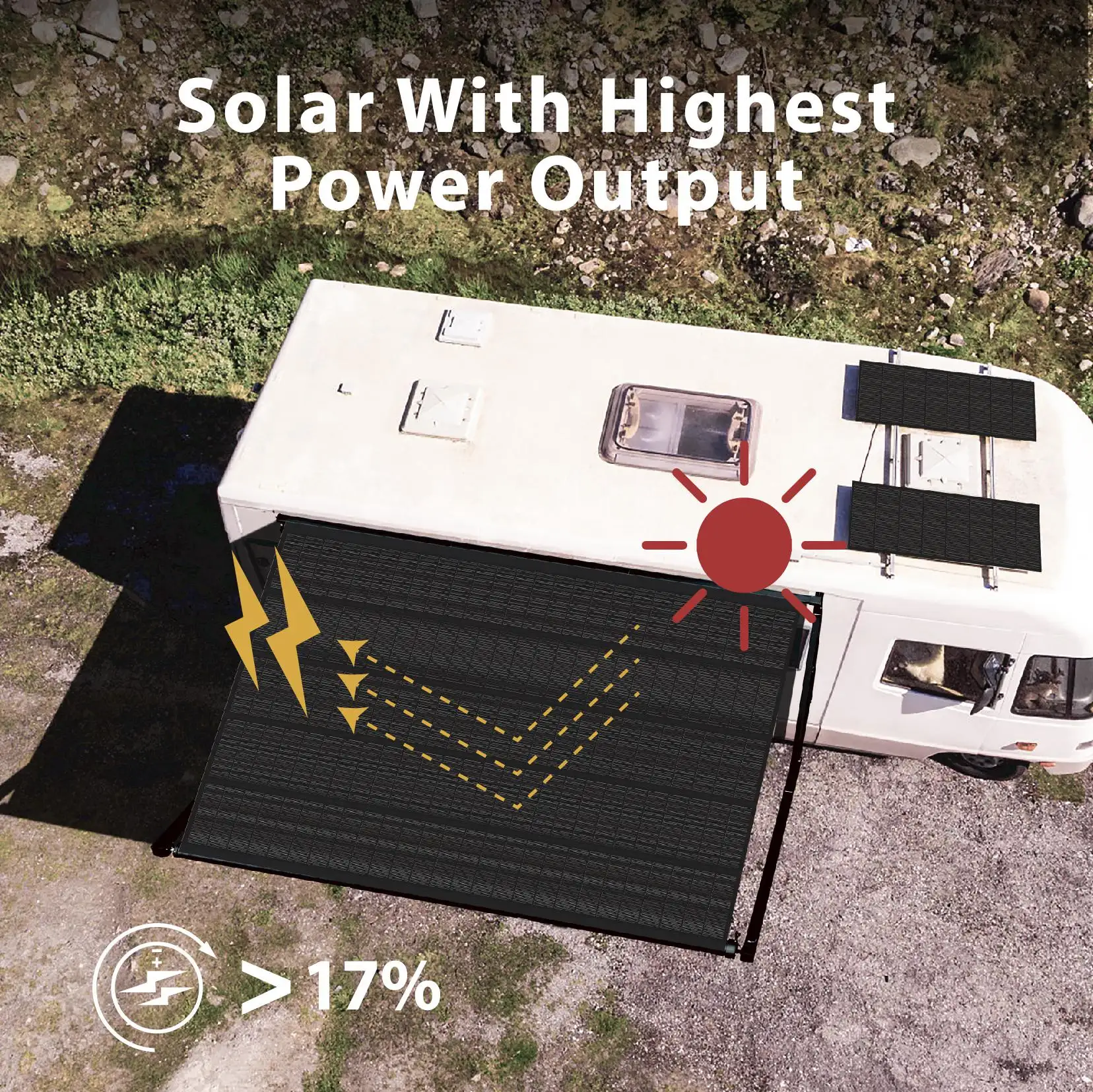
A Practical Way to Estimate Charging Time
Instead of looking for one universal number, users can make a rough estimate by following a simple thought process.
First, identify the battery capacity in watt-hours or kilowatt-hours. Second, understand the expected solar input under real sunlight. Third, account for controller efficiency, battery condition, and any input limit on the power station. Finally, remember that charging slows as many batteries approach full.
This approach is more useful than memorizing a single charging chart. It helps RV owners understand why the same solar awning may perform differently with a 100Ah battery, a 200Ah battery, or a portable power station.
Final Advice
An RV solar awning can be a valuable charging source, but the charging time depends on the entire system. A 100Ah battery may show faster results because it has less capacity to refill. A 200Ah battery stores more energy but needs more time. Portable power stations such as Jackery and EcoFlow may be limited by their own solar input specifications.
Before choosing a solar awning, confirm the battery size, system voltage, controller compatibility, connector requirements, and real sunlight conditions. That is the most reliable way to understand what charging performance will look like in everyday RV use.
A solar awning is most useful when it fits both the campsite and the power system behind it.