
 EN
EN
 FR
FR DE
DE JA
JA KO
KO RU
RU ES
ES AR
AR IT
IT
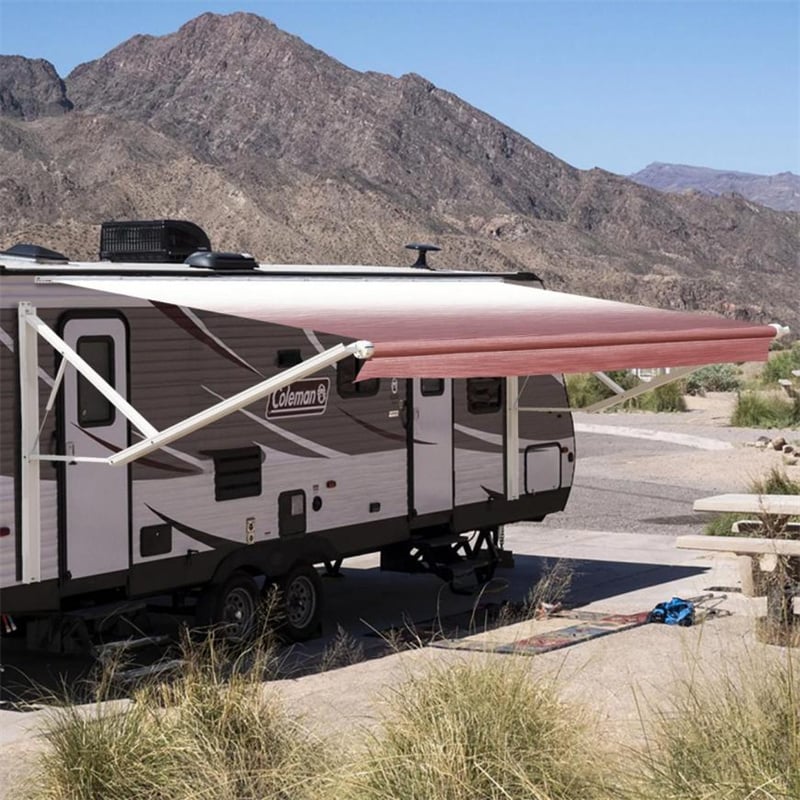
When buyers compare Awnlux vs Solera, they are often trying to answer a practical question: which awning will make more sense over time? The first purchase price matters, but it is rarely the whole story. For RV owners, dealers, and repair shops, the more useful comparison includes awning fabric, structure, ease of maintenance, long-term durability, and warranty support.
An RV awning lives outside. It is opened under sun, packed away after rain, exposed to dust, handled during travel, and used again at the next campsite. That is why the best comparison should focus on ownership experience, not just product names.
Fabric Is About More Than Appearance
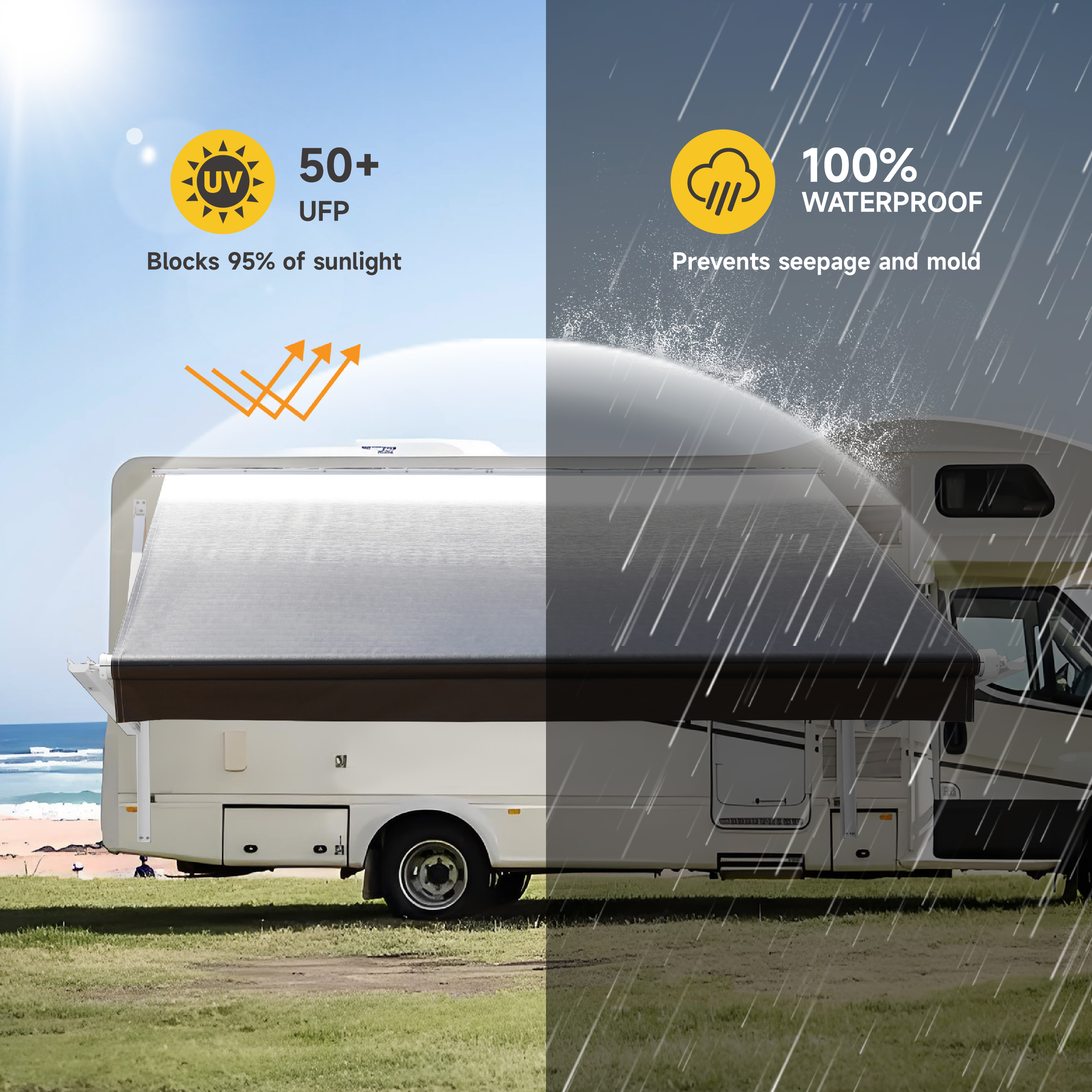
The fabric is one of the first things buyers notice, but it should not be judged only by color or surface feel. Awning fabric affects shade quality, water resistance, cleaning, storage, and long-term usability.
For users who camp frequently, the fabric goes through repeated cycles of sun exposure, retraction, moisture, dust, and handling. A fabric that performs well at first but becomes difficult to maintain later can change the overall value of the awning.
Awnlux uses different fabric directions across its awning range, including waterproof vinyl or PVC-based materials for standard awnings and CIGS flexible solar fabric for solar awning models. For buyers comparing with Solera, the important step is to look beyond the brand name and ask what material is used, how it stores, how it is maintained, and whether replacement fabric can be supplied when needed.
This kind of comparison is especially important for B2B buyers because fabric quality directly affects customer satisfaction after the sale.
Price Should Be Read as Value Structure
Awning price can be difficult to compare because two products may not include the same structure, features, or support. A lower price may reflect a simpler manual awning. A higher price may reflect full cassette protection, electric operation, solar technology, stronger structural direction, or more complete service support.
This is why buyers should avoid comparing price without understanding what is included. A roll-out awning for a basic caravan setup should not be compared directly with a solar awning designed to support off-grid power. A manual awning should not be compared in the same way as an electric awning with remote operation and wind-sensor-related functionality.
For Awnlux, the value discussion often includes product structure, material choice, solar awning technology, and support for replacement parts. For Solera, buyers should look at the exact model, installation type, fabric specification, and service terms before deciding whether the price comparison is meaningful.
The better question is not “which one is cheaper?” It is “which one fits the way this RV will actually be used?”
Durability Depends on Structure and Use
Durability is not only about how strong an awning looks when new. It is about how the awning handles repeated use over months and years.
For users who travel often, stored protection matters. A full cassette design can help protect the fabric when the awning is closed, which is useful for vans and motorhomes that spend a lot of time on the road. For users who stay longer at campsites, roll-out coverage may be more important because the awning becomes part of the outdoor living area.
Awnlux offers both full cassette and roll-out directions, which means buyers can choose based on how the awning will be used. If the priority is frequent movement and stored protection, a cassette direction may be more suitable. If the priority is wide shade for stationary camping, a roll-out direction may fit better.
When comparing Awnlux with Solera, buyers should ask how each awning is expected to be used. A product that is durable for one style of camping may not be the best match for another.
Warranty Is Part of the Buying Experience
Warranty is often discussed after something goes wrong, but it should be considered before purchase. A warranty helps define what kind of confidence the brand provides and how service issues may be handled.
For RV awnings, support can involve different parts of the system: fabric, frame, arms, motor, or solar components. Buyers should understand what is covered, how claims are handled, and whether replacement parts can be supplied without replacing the whole awning.
For dealers and repair shops, this matters even more. A clear support path can reduce customer frustration and make after-sales service easier. If fabric, arms, or motors can be identified and replaced more efficiently, the long-term ownership experience improves.
When comparing Awnlux vs Solera, warranty should not be reduced to a single headline. Buyers should look at coverage by component, service process, replacement part availability, and how easily the issue can be resolved in the user’s region.
Solar Awnings Add Another Comparison Layer
If the buyer is considering a solar awning, the comparison becomes more complex. A solar awning is not just an awning with a different fabric. It becomes part of the RV’s power setup.
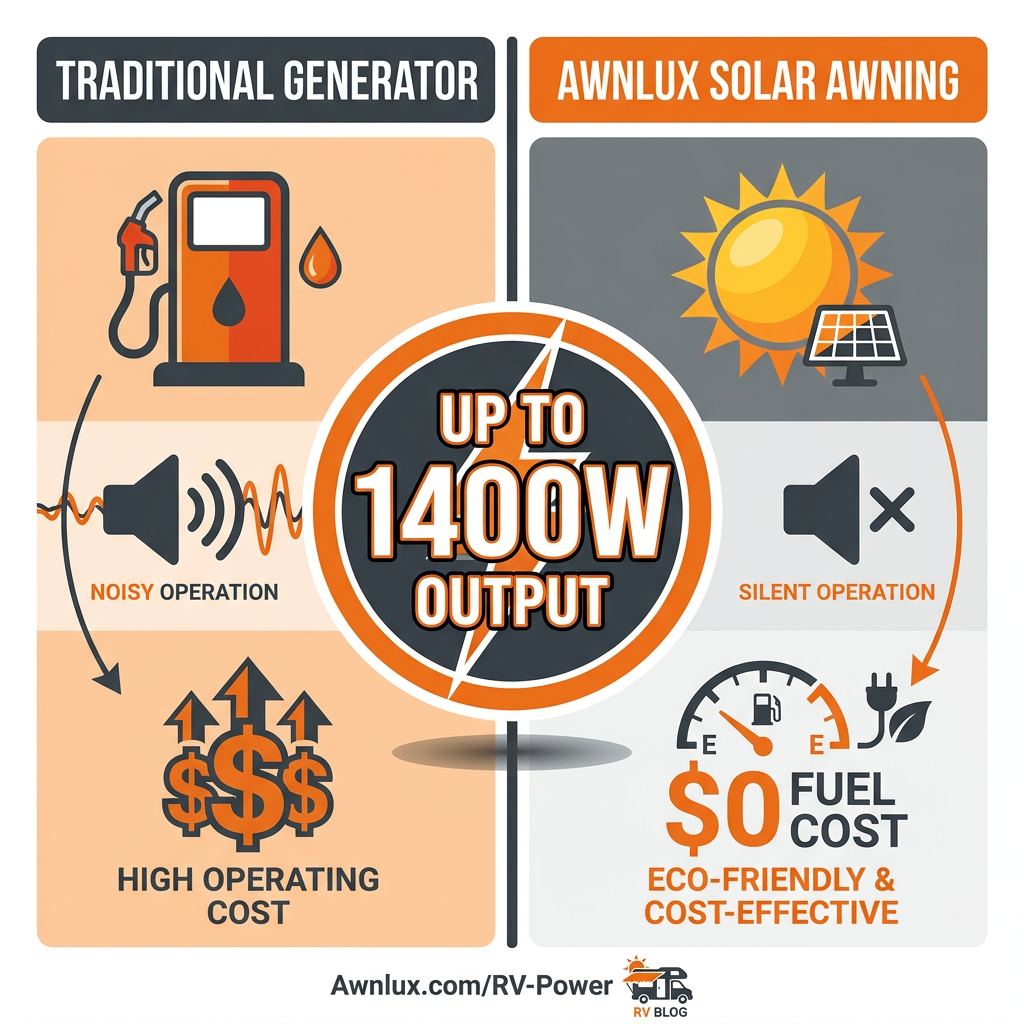
Awnlux solar awnings use CIGS flexible solar technology, which is relevant for users who want shade and power generation in one system. This kind of awning may appeal to motorhome or caravan users who spend time off-grid and want to use the awning surface more effectively.
In this case, price and durability should be considered alongside battery compatibility, controller setup, and real sunlight conditions. A solar awning may offer strong value for the right user, but it should not be treated as a universal upgrade for every RV owner.
Which Buyer Fits Which Direction?
A buyer who wants simple campsite shade and familiar operation may focus on roll-out awning options and compare fabric, installation, and support. A buyer who travels frequently may care more about full cassette storage and how the awning behaves when closed. A buyer who wants off-grid power support may focus on solar awning options.
This is why a one-line conclusion is not helpful. Awnlux and Solera may both appear in the same comparison, but the best choice depends on the exact use case.
For a dealer, the right product may be the one that is easier to explain, install, and service. For an RV owner, the right product may be the one that fits the vehicle and camping style with the least frustration.
Final Advice
When comparing Awnlux vs Solera, do not stop at the purchase price. Look at awning fabric, structure, durability, warranty, replacement parts, and how the product will be used in real camping conditions.
A lower price can be attractive, but long-term value comes from fit, usability, and support. A more advanced awning can be worthwhile when the features match the user’s travel style. The best choice is the one that continues to make sense after installation, after the first season, and after the awning has become part of everyday RV life.