
 EN
EN
 FR
FR DE
DE JA
JA KO
KO RU
RU ES
ES AR
AR IT
IT
The Engineering Behind Smart Safety
Whether you are living on the road or camping outdoors, an awning is your go-to gear for enjoying shade and staying dry. However, anyone with outdoor experience knows that strong winds are an awning's worst enemy.
A Tug-of-War Against the Wind
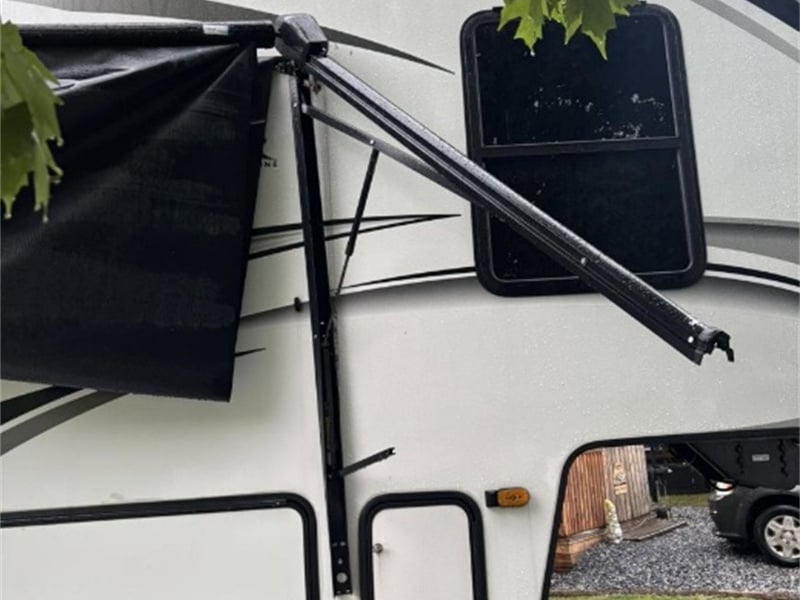
When fully extended, a large fabric canopy—often covering over a hundred square feet—acts like a massive ship's sail. A sudden gust of wind builds up immense atmospheric drag across this surface area. This triggers a high-stakes tug-of-war: leverage forces multiply and concentrate directly on the mounting brackets and screws attached to your RV wall or vehicle body. At best, this causes bent arms and torn fabric; at worst, it rips the entire assembly off the wall, leading to serious damage and safety hazards.
Many campers think: "I'll just keep an eye on it and retract it manually if the wind picks up."
In reality, nobody can watch the weather 24/7. Stepping into the restroom, cooking inside, stepping away on a quick errand, or simply taking a afternoon nap under the shade—a sudden peak gust takes only three to five seconds to destroy an open awning.
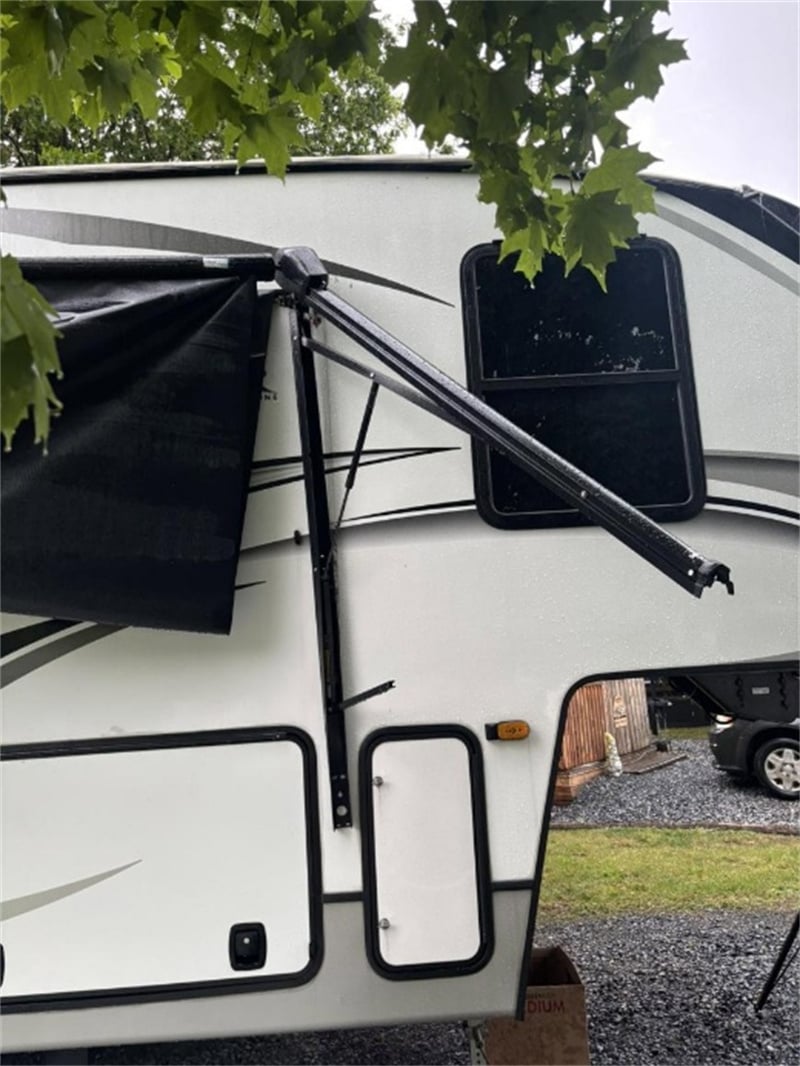
By the time human eyes register the storm and reach for the remote control, structural damage has usually already occurred. This is why an awning needs "self-awareness"—a split-second automated protection system capable of rescuing itself before danger strikes.
1. The Sensory System: How Does It Detect the Wind?
Sensors act as the "nervous system" of the entire setup. Currently, two main types of sensors are available in the market: the "eye" and the "skin."
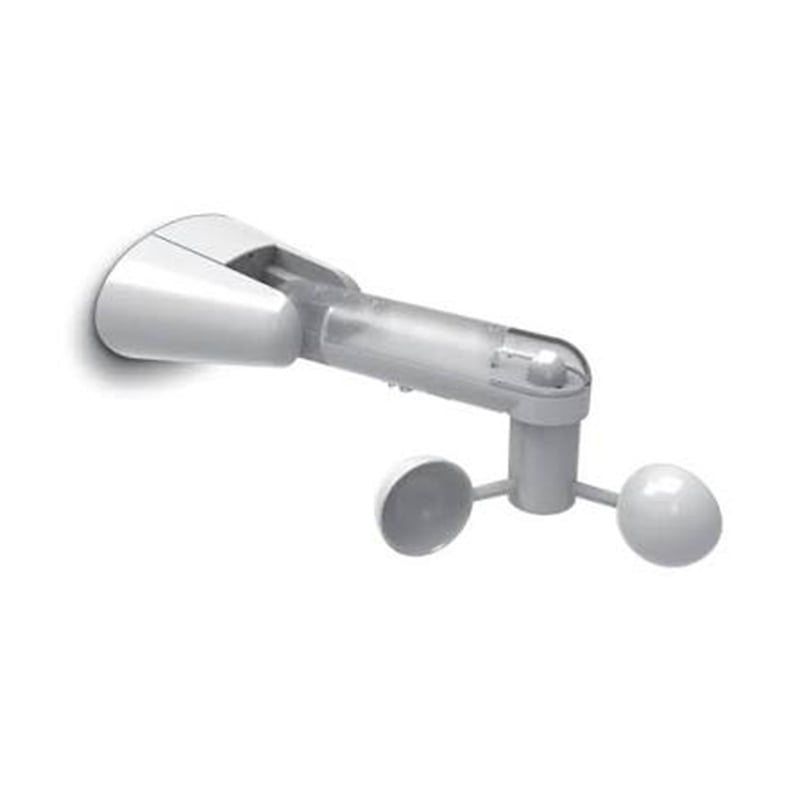
A. The "Eye": Traditional Anemometer (Wind Cup)
Installed at a high point, it works like a miniature windmill. As the wind blows, the cups spin, and the internal chip converts rotational speed into electrical signals to calculate ambient wind speed.
- Pros: Accurate measurement of ambient wind speed; capable of detecting incoming wind early.
- Cons: Visually bulky; cannot measure the actual physical strain directly inflicted on the awning itself.
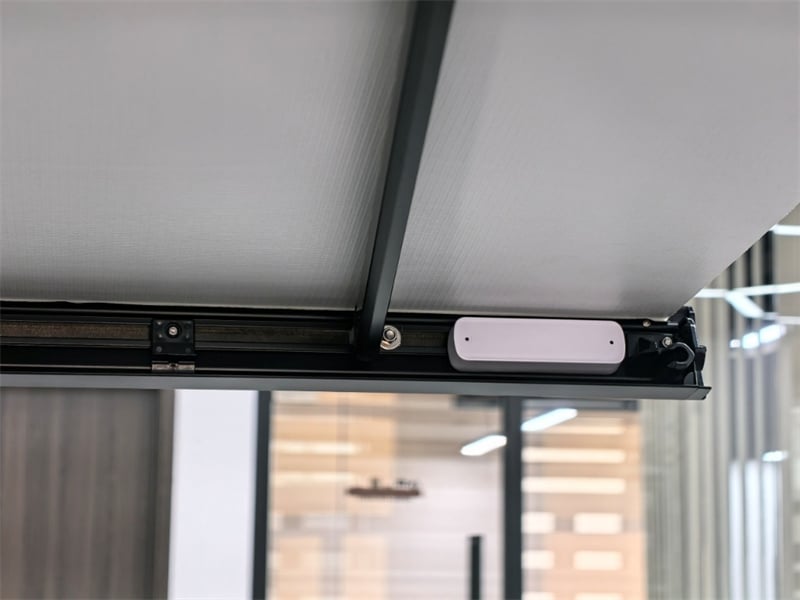
B. The "Skin": 3D Motion & Vibration Sensor
This is the modern industry standard.
A 3D vibration sensing system eliminates external spinning parts entirely. Instead of measuring air velocity, its perception relies on the awning frame itself. Compact and discreetly built into the front bar at the outermost edge of the awning, it houses high-precision accelerometers to capture real-time shaking, pitching, and sway caused by wind. It measures actual physical stress rather than general wind speeds—making it extremely responsive to sudden gusts and localized turbulence while remaining completely hidden.
Detailed Comparison: Wind Cup Anemometer vs. 3D Vibration Sensor
|
Comparison Dimension |
Traditional Wind Cup Anemometer |
3D Motion & Vibration Sensor |
|
Operating Principle |
Measures ambient air velocity |
Directly measures physical vibration & stress on the awning frame |
|
Primary Target |
External wind speed |
Shaking amplitude at the awning's lead rail / front bar |
|
Installation Location |
High-mounted, exposed bracket |
Fully concealed inside the front bar |
|
Aesthetic Impact |
Exposed spinning cups; bulky and visually intrusive |
No exposed moving parts; sleek and hidden |
|
Response Profile |
Ideal for steady winds; misses actual structural load |
Ultra-fast response; excels at sudden gusts, downbursts, and real structural loads |
|
Mechanical Design |
Features rotating mechanical components (cups, shafts, bearings) |
Solid-state electronic components; zero moving mechanical parts |
|
Lifespan |
Subject to mechanical wear; prone to jamming from dust, rain, ice, or snow |
Zero mechanical wear; unaffected by dust or freezing weather; significantly longer lifespan |
|
Maintenance |
Requires periodic cleaning, dust removal, and bearing lubrication |
100% maintenance-free |
|
Summary Comparison |
High mechanical wear, visible footprint, measures surrounding air rather than awning force; best for fixed structures with steady winds and regular maintenance |
Zero mechanical wear, discreet aesthetics, reads true awning stress, superior gust protection, longer lifespan, and lower maintenance costs |
|
Recommendation |
Suitable for fixed architectural setups with predictable weather and scheduled upkeep |
Highly recommended for RVs and patio awnings facing unpredictable gusts and harsh outdoor conditions |
Note: Professional shade manufacturers such as Awnlux provide custom options to integrate high-precision 3D vibration sensors into their automated awning systems.
2. The Controller: Gentle Breezes or Dangerous Gusts?
Once sensor data is collected, it is transmitted to the micro-controller—the "brain" of the system. An effective controller operates on two core principles:
a. Algorithmic Filtering:
If the awning retracted with every gentle breeze, it would spoil your outdoor relaxation. The controller's embedded smart algorithm analyzes vibration frequency and amplitude. Low-frequency sways from comfortable breezes are filtered out. Auto-retraction triggers only when vibration amplitude or wind force continuously exceeds pre-set safety thresholds.
b. Fail-Safe Protection Protocol:
What happens if the sensor battery dies or the wireless signal is lost? Commercial-grade systems feature a built-in fail-safe protocol: if communication between the sensor and controller drops, the system defaults to "unknown environmental risk" and automatically retracts and locks the awning. This prevents hardware exposure even if a communication link fails.
3. The Actuator: Retracting the Canopy Under Load
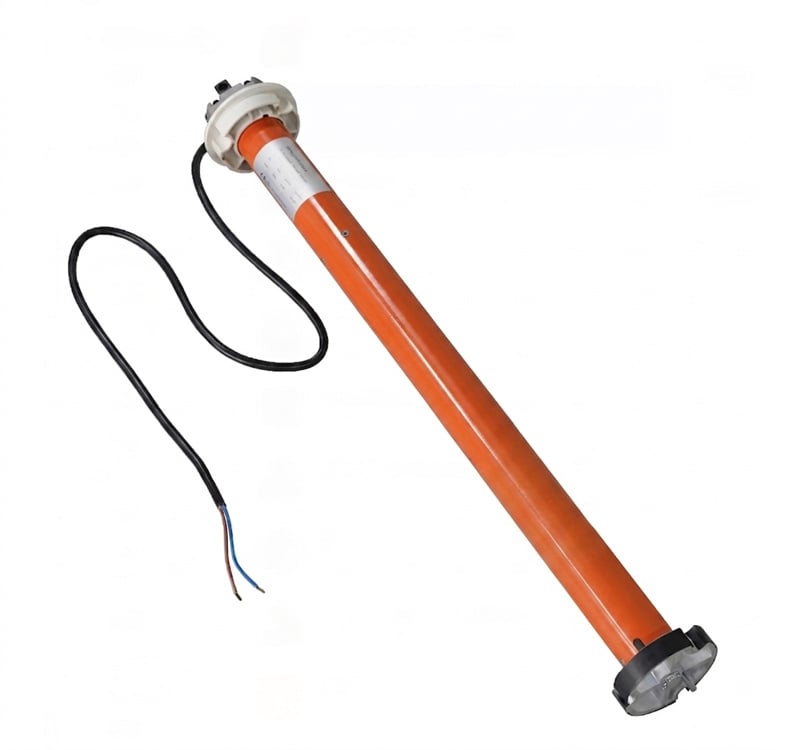
When a retraction command is issued, the tubular motor hidden inside the roller tube—the "muscle" of the system—takes over:
- Delivers High Torque: The slim tubular motor integrates an internal planetary gearbox to output heavy pulling force.
- Retracts Against Wind Drag: The motor drives the roller tube to roll the fabric tight while overcoming the heavy internal tension springs inside the support arms and external wind resistance—safely folding the metal arms and multi-square-foot canopy in seconds.
4. Enjoy True Outdoor Freedom
Smart wind-sensing auto-retraction is not just a sensor slapped onto a frame; it is an integrated engineering ecosystem. The vibration sensor serves as the tactile nerve, the micro-controller acts as the decision-making brain, and the high-torque tubular motor provides physical muscle. Working in harmony within milliseconds, they execute a seamless cycle of Perceive → Process → Act.
The essence of modern outdoor living is relaxation. With an invisible "safety net" powered by smart 3D vibration sensing, you no longer need to constantly check the sky or worry about your gear when leaving camp. By giving your awning the intelligence to protect itself, technology grants you total peace of mind under the open sky.
Partner with Awnlux
Looking to source Awnlux automated awnings equipped with 3D vibration wind sensors? We offer complete one-stop solutions including model selection, technical support, bulk customization, and OEM manufacturing. Whether for custom RV builds, commercial fleets, or residential patio projects, we deliver tailored, high-performance shading systems.
Popular Series Compatible with Smart 3D Vibration Sensors:
- Classic Electric Roll-Out RV Awning: https://www.awnlux.com/electric-rv-awning
- Roof-Mounted RV Awning: https://www.awnlux.com/roof-mounted-rv-awning
- Wall-Mounted Cassette RV Awning (W5500): https://www.awnlux.com/awnlux-w5500-wall-mount-cassette-rv-awning
- Wall-Mounted Large Cassette Awning: https://www.awnlux.com/wall-mount-large-cassette-awning
- Email: [email protected]
- Official Website: www.awnlux.com
- Online Shop: www.awnluxpro.com
- Phone: +86-21 57793893
- YouTube: https://www.youtube.com/@awnluxrvawning1619
Contact us today to discuss your project requirements!