
 EN
 FR
 DE
 JA
 KO
 RU
 ES
 AR
 IT

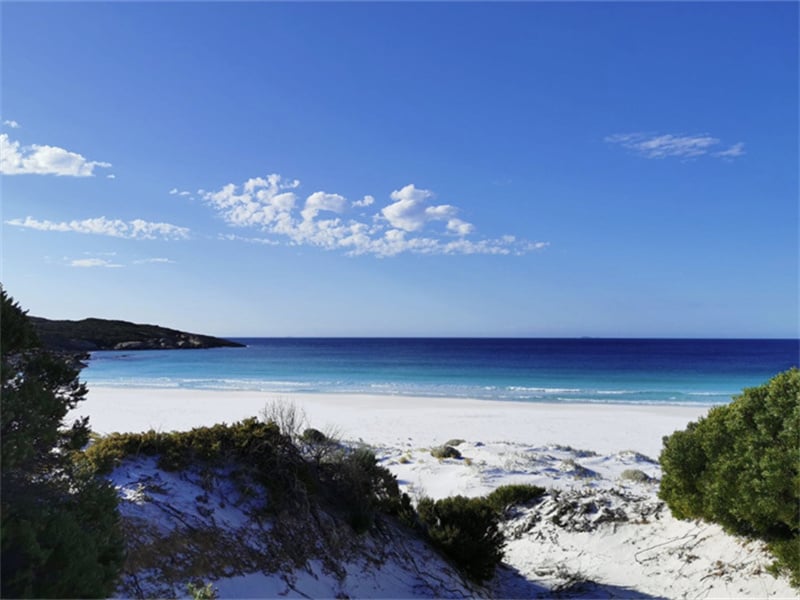
This guide aims to help dealers and end-users understand how coastal gusts, repeated awning fabric flapping and salt corrosion accelerate wear on RV awnings. Learn the differences between Awnlux anti-flap arms and deflapper awning clamp, master proper model selection, installation guidelines, and specialized maintenance for coastal environments to reduce coastal wind-related damage risks.
I.How Coastal Winds Accelerate RV Awning Wear
Australia Coastal caravan campsites offer stunning scenery, but open camping areas often come with unpredictable gusts, salty air, and intense UV exposure. These environmental factors significantly increase awning wear, especially when awnings remain extended for prolonged periods.
Repeated wind-driven flapping places continuous alternating stress on the fabric, seams, stitching, meanwhile on support arms, joints, and mounting points. Over time,persistent oscillation combined with UV aging and material fatigue—leads to stretched or wrinkled canvas, abraded yarn, and loosened fasteners, ultimately causing premature awning failure.
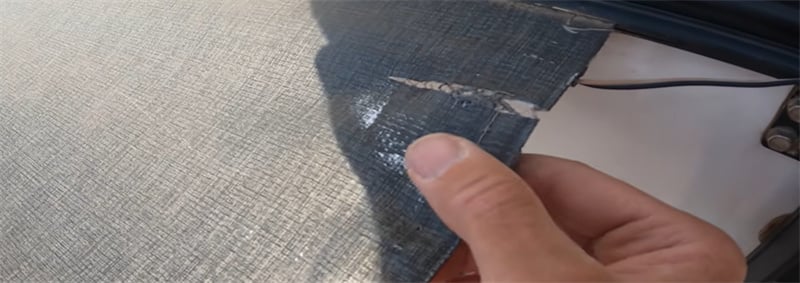
RV industry guidelines also warn that sustained gusts stress awning seams and support hardware.
Salt spray corrosion is another key risk: salt mixed with moisture sticks to metal parts and, if not cleaned regularly, speeds up corrosion.
For RV users camping often along Australia's coast, awning protection must address both mechanical wear from flapping and salt-spray corrosion.
Key conclusion: Wind-related awning wear has no single cause. Fabric quality, UV exposure, gust strength, installation, and maintenance all affect awning lifespan. Anti-flap kits cannot repair old fabric that is cracked, seam-damaged, or brittle from aging.
II.How Anti-Flap Systems Extend Awning Service Life
The anti-flap system keeps the awning surface steady and cuts the cyclic stress on the fabric, supports, and mounts.
Aussie Traveller notes that wind-driven flapping wears the fabric and loads the supports and mounts; it defines an anti-flap kit as an in-rated-condition accessory that stabilizes the fabric and helps protect the awning.
(Source: Aussie Traveller – What Is a Caravan Anti-Flap Kit and Do You Really Need One?)
On the Caravaners Forum, RV owners share about 13 years of combined anti-flap kit use across two caravans, and compare anti-flap arms against simple deflapper clamps.
(Source: Caravaners Forum – Awning Deflappers: What's the Difference?)
These are real-world user reports from both inland and coastal trips, not controlled lab test results.
Can the anti-flap kits extend caravan awning service life?
With intact fabric, a matched kit, correct fitting, and timely retraction in high wind, they remove a major wear source and slow ageing.
There is no universal lifespan gain—results depend on awning build, coastal exposure, use, fitting, and pre-existing condition. Treat them as a wear-reduction tool, not a guarantee of extra years or storm resistance beyond the awning's rated wind speed.
Safety Note
Anti-flap kits do not raise the awning's factory wind rating and are not storm-proof. Retract the awning once winds exceed the manufacturer's gust limits.
Anti-flap arms take longer to remove—allow extra time and pack up before severe weather hits. Deflapper clamps come off fast, but neither may stay out beyond the rated wind speed.
III.How to choose the suitable Awnlux Anti-Flap Products?
Different awning types and camping setups call for different stabilising solutions. Awnlux offers two: the Anti-Flap Arm (full-length support) and the Deflapper awning Clamp (point local fixing), both built to reduce fabric flapping.
Terminology: "Anti-Flap Kit" is a general industry term; here, Anti-Flap Arm means the full-length rod, and Deflapper clamp means the local point anti-shake clamp.
Option A: Awnlux Anti-Flap Arm
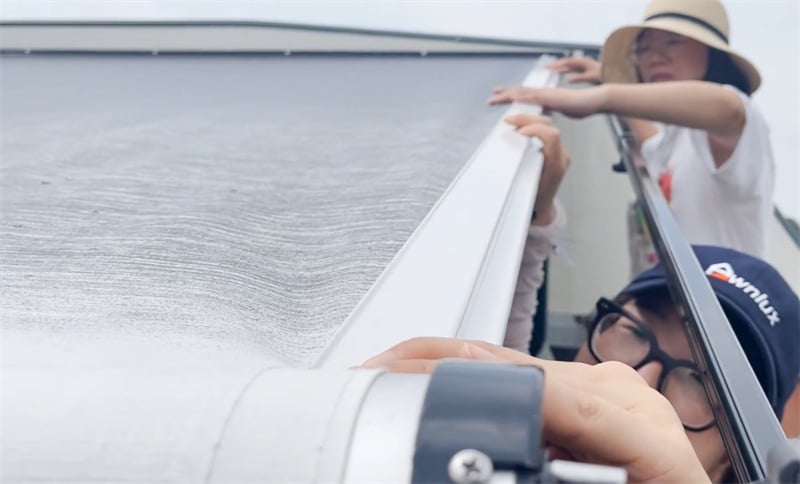
The The Awnlux Anti-Flap Arm runs full-length support along the canopy edge, controlling fabric sway over a wide area. It suits long stays, users who want full awning stability, and anyone adding privacy screens or wind walls—its built-in sail track lets you mount these directly.
Coastal note: Powder-coated aluminium body handles salt spray better than simple clamps—best pick for long coastal camping.
- W5000AFA: compatible with Awnlux cassette awnings
- W5600AFA: compatible with roll-out caravan awnings
Check your awning brand, model, and leading-edge structure against the compatibility list before buying. Some mounts require drilling—plan ahead.
Option B: Awnlux Deflapper Awning Clamp
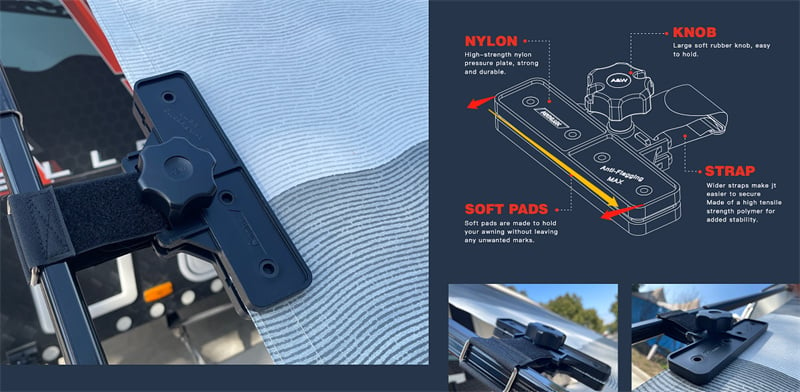
The deflapper awning clamp is compact, quick to fit and remove, and limits flapping at chosen points—ideal for short trips and temporary fixing. It fixes only; no built-in sail track, so wind walls or privacy panels can't be attached.
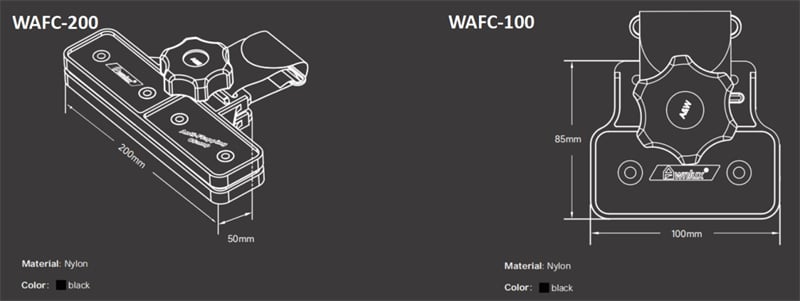
- Large WAFC-200: Suitable for Caravan Roll-out awning, not applicable for Cassette Awning
- Small WAFC-100: Suitable for Caravan Roll-out awning, not applicable for Cassette Awning
Coastal tip: After use by the seaside, salt should be removed in time (for details, see Part Four: Cleaning and Maintenance).
How to choose between large-sized (WAFC-200) and small-sized (WAFC-100)?
Note: Both Deflapper Clamps share the same wind rating and are not storm-proof (see safety note above for retraction rules). Both are designed with a soft rubber liner and won't mark fabric in short-term use; long-term clamping may cause slight deformation at the grip point—normal, so reposition periodically. Size differences come down to grip area, value, and long-term feel—not wind strength.
|
Difference |
Small Deflapper WAFC-100 |
Large Deflapper WAFC-200 |
|
Clamp Length |
100 mm |
200 mm |
|
Interlocking area |
Smaller, providing point or local clamping force |
can cover a large area of the edge of the awning fabric, and the force is more evenly distributed |
|
Performance |
|
|
|
Cost Performance |
Lower price, high cost performance, suitable for short-distance and light use with limited budgets |
higher price,more stable under the long awning and high-frequency use |
Product Comparison Matrix
|
Matrix |
Anti-Flap Arm |
Deflapper Clamp |
|
Model |
W5000AFA / W5600AFA |
WAFC-100 / WAFC-200 |
|
Operating principle |
Continuous leading-edge support |
Discrete-point local restraint |
|
Performance |
Strong overall stabilisation; reduces pooling risk (not fully elimination) |
Light-weight, rapid assembly / disassembly; partial flapping control |
|
Side-wall compatibility |
Yes (integrated sail track) |
No |
|
Coastal recommendation |
★★★★★ Aluminium salt-fog resistant, preferred for long coastal trips |
★★★★ For short-term temporary use; frequent salt-cleaning required |
|
Best for |
Long-stay campers needing stability and side-wall fitment |
Short-trip users prioritising fast installation |
IV.Maintenance and Verification:How to Maintain Long-term Performance?
Choosing the right accessories is just one part of protection. Only through standardized installation and periodic inspection can the protective effect be stably exerted, especially in coastal environments with high salt fog.
1.Install in accordance with the structural specifications of the RV awning
1)Before fitting, confirm the anti flap kit matches your awning, and follow the positioning, fixing, and tensioning steps.
2)If W5000AFA / W5600AFA installation requires drilling or bodywork changes, follow the instructions and seal every hole against corrosion.
3)Never force-fit or over-tighten. Over-tension stresses the fabric and mounts and can damage both.
2.Regularly check these locations before each trip and during the camp stay
1)Fabric Edges, seams: Check for pilling, stretching and cracks
2)Fixture clamping contact surface: Displacement and sharp corners can damage the fabric cloth
3)Locks, screws, and installation brackets: Loose and worn
4)Metal parts coating: Peeling paint, salt accumulation, and signs of rust
5)Overall position of parts: Whether they are skewed and cause uneven pulling on the awning fabric cloth
3.Clean and remove salt in time after use in coastal areas
Salt and sand grains can clog moving mechanisms and accelerate metal rusting. After use at the seaside, rinse the accessible parts with clean water at room temperature, gently brush off the salt sand with a soft-bristled brush, and then dry them thoroughly.
Unless explicitly permitted by the material manual, do not use strong acid or alkali cleaners or scrub. Keep the regulating mechanism free from sand and mud sticking. Replace the parts in time if they are rusted or damaged.
V.Final Summary
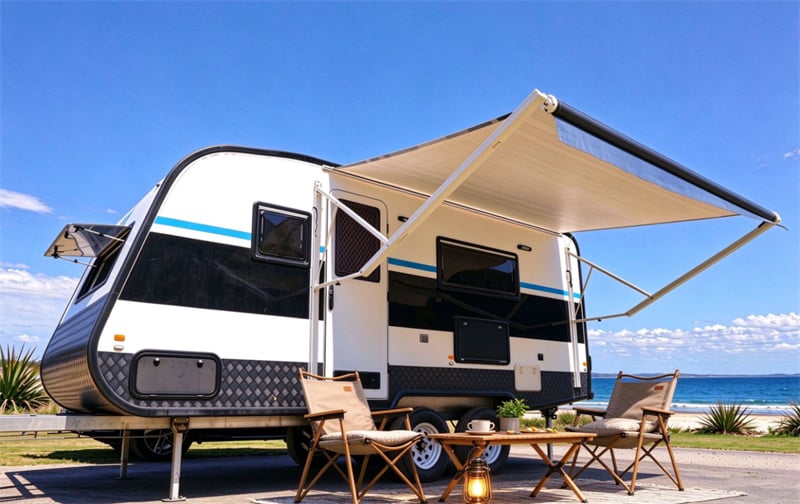
Coastal gusts, UV radiation and salt spray inflict mechanical and corrosive harm on coastal RV awning units.
The right Awnlux anti-flap kit cuts fabric flapping, and only with correct fitting, regular checks, and post-trip salt cleaning does the whole setup stay effective. Stable mounting, smart pack-up habits, and ongoing care together extend reliable awning life.
Not sure which anti-flap kit is suitable for your RV?
Contact Awnlux via:
Email:[email protected]
Website:www.awnlux.com